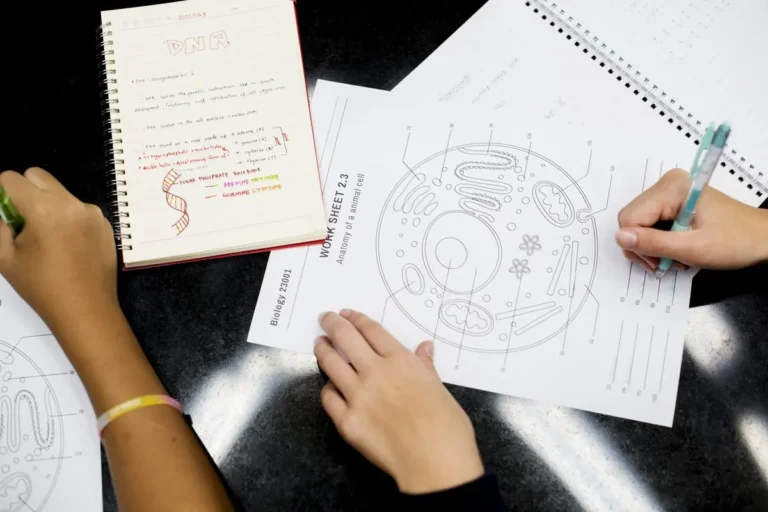
The Pomodoro technique for students is a simple way to revise in short, timed bursts: set a timer for about 25 minutes, work on one task until it rings, take a short break, then repeat. For teenagers who find it hard to start revising, or who drift after ten minutes, it turns a vague evening of “doing homework” into a series of small, finishable blocks. The routine matters more than the exact numbers, and this guide shows how to adapt it.
It works best alongside steady habits rather than last-minute cramming, which is the theme of our post on why consistency beats cramming.
Key takeaways
- One focus block means one task, one timer and no phone in reach.
- Around 25 minutes is a sensible starting point; shorter blocks suit students who struggle to begin.
- Decide the task before the timer starts, so the block is spent working, not choosing.
- Breaks should be away from the desk and away from scrolling.
- Four or so blocks with one longer rest makes a solid revision evening.
In this guide, we’ll cover:
- What is the Pomodoro technique?
- Why short focus bursts help teenagers start
- How to set up a 25 minute study block
- Is 25 minutes right for every student?
- What to do in study breaks
- Matching blocks to active revision methods
- How parents can support the routine
- Frequently asked questions
- Getting started this week
What is the Pomodoro technique?
At its simplest, it is a timer-based routine. You pick one piece of work, start a countdown, and give that work your full attention until the timer goes off. Then you stop, rest briefly, and begin the next block. After several blocks, you take a longer break.
You need nothing special: a kitchen timer, a watch or a simple desk timer will do. The appeal is that the finish line is always in sight. Saying “I will revise chemistry tonight” feels heavy; saying “I will do one 25 minute block on moles, then have a break” feels possible.
Why short focus bursts help teenagers start
For many teenagers, the revision problem is not ability. It is starting, and about keeping going once distractions creep in. A timer helps with both.
- It lowers the barrier to starting. Committing to one short block is easier than committing to an evening.
- It makes distraction visible. If the phone gets picked up mid-block, the student knows exactly when focus broke.
- It builds in rest. Breaks are planned, so there is less guilt about stopping and less temptation to take an unplanned hour off.
- It gives a simple record. “Four blocks done” is a clear, honest measure of an evening’s work, and easy to share with a parent.
If concentration is a wider worry, our parents’ guide to screen time and concentration looks at the habits that make focus harder in the first place.
How to set up a 25 minute study block
- Choose the task first. Write it on a sticky note: “Physics Paper 1, questions 1 to 4” or “Learn ten Macbeth quotations”. A block with no clear task becomes a block of tidying folders.
- Clear the desk. Only what the task needs: the book, the paper, a pen, a calculator if required.
- Put the phone in another room. Face down on the desk still leaves it within reach. If the phone is the timer, use a separate timer instead.
- Start the timer and work. If a stray thought arrives (“I need to message Sam”), jot it on scrap paper and carry on.
- Stop when it rings. Finish the sentence, then stop. Mark where you got to.
- Take the break. Stand up, move, get a drink.
- Repeat, and take a longer break after about four blocks.
A sample revision evening
| Time | Block | Task |
|---|---|---|
| 17:30 | Focus 1 | Maths: one topic from the weakest list, five practice questions |
| 17:55 | Short break | Drink, stretch, step outside |
| 18:00 | Focus 2 | Maths: mark the questions and correct mistakes |
| 18:25 | Short break | Away from the desk |
| 18:30 | Focus 3 | Science: blurt everything you remember about one topic, then check |
| 18:55 | Short break | Snack |
| 19:00 | Focus 4 | English: plan one essay answer |
| 19:25 | Long break | Dinner, family time |
That is 100 minutes of focused work, which is plenty for a school night. Some students will do two blocks, not four, and that is still a good evening.
Is 25 minutes right for every student?
Treat 25 minutes as a starting point, not a rule. The right length is the one your child can actually sustain with full attention.
| Situation | Try this |
|---|---|
| Struggles to start at all | 10 or 15 minute blocks for the first week, then lengthen |
| Loses focus quickly | 15 to 20 minute blocks with very short breaks |
| Gets absorbed and resents stopping | 40 to 50 minute blocks with longer breaks |
| Practising timed exam questions | Match the block to the time allowed for the question or section |
If your child has ADHD or other attention needs, try shorter blocks and very concrete tasks, and see what works. Talk to the school’s SENCo if focus difficulties are affecting schoolwork more broadly; a timer is a helpful tool, not a substitute for proper support.
What to do in study breaks
The break is where the routine most often goes wrong. Five minutes on a phone can easily turn into thirty, and the next block never starts. Good breaks are short, physical and screen-free.
- Stand up and walk around the house or garden.
- Get a glass of water or a piece of fruit.
- Stretch, or do a few star jumps.
- Look out of a window, away from screens.
- Chat to a parent or sibling for a few minutes.
Save messages, games and videos for the longer break or for after the session. A useful test: if the break activity has no natural end, it is the wrong break activity.
Matching blocks to active revision methods
A timer only organises the time. What fills the block decides how much is learned. Rather than rereading, fill each block with an active task that makes you produce answers:
- Blurting: write down everything you know on a topic from memory, then check against notes. Our guide to the blurting revision method explains it step by step.
- Flashcards: one block of testing yourself, putting wrong cards in a separate pile. See how to make effective flashcards.
- Past paper questions: one block to answer, the next block to mark and correct.
- Explain it aloud: teach the topic to an empty chair or a parent, then fill the gaps.
Try pairing an “attempt” block with a “check and fix” block.
How parents can support the routine
- Help set it up, then step back. Agree the plan together; nagging mid-block breaks the focus you are trying to protect.
- Offer a phone parking spot. A charging point in the kitchen makes “phone out of the room” easy.
- Provide a comfortable place to study. The NHS advice on helping your child beat exam stress suggests making sure your child has somewhere comfortable to study and helping them draw up a revision schedule.
- Protect sleep. The same NHS page says most teenagers need 8 to 10 hours’ sleep a night. More blocks late at night is rarely worth losing sleep over.
- Notice effort. “You did three blocks tonight” is better encouragement than “Have you finished revising yet?”
Frequently asked questions
Does the Pomodoro technique work for revision?
It can help, because it makes starting easier and keeps distractions visible. It works best when each block has one clear, active task, such as practice questions or self-testing, rather than rereading notes. If a student finds the timer stressful rather than helpful, adjust the block length or try a different routine.
How long should study breaks be?
Short breaks of about five minutes between blocks suit most students, with a longer break of fifteen minutes or more after three or four blocks. The exact length matters less than what happens in it: stand up, move, drink water and stay off the phone, so the next block actually begins on time.
Can I use my phone as a study timer?
You can, but it often defeats the purpose, because notifications arrive while you are setting it. A cheap kitchen timer, a watch or a timer on a desktop with notifications switched off is usually better. If the phone must be used, put it in do not disturb mode and leave it in another room.
How many Pomodoro blocks should a GCSE student do in an evening?
On a school night, two to four focused blocks is a realistic target for most GCSE students, alongside homework. In the holidays or near exams, more is possible with longer breaks in between. Quality matters more than quantity: plan two blocks on weak topics rather than six blocks of copying notes.
Is the Pomodoro technique good for students with ADHD?
Short blocks keep the end point close, which some families find helpful. Try shorter blocks, very specific tasks and movement in breaks, and adjust to suit your child. If concentration is holding back learning in several subjects, raise it with the school’s special educational needs coordinator.
Getting started this week
Try it for one week before judging it. Pick two evenings, plan two blocks each time with a written task, park the phone and see what gets done. Adjust the block length after that first week. If your child would benefit from structured, focused sessions with a tutor, our online tuition in Milton Keynes fits around home study, and you can book a free assessment to see where to start.
Next step: Book a free assessment with PrimePlus and we will identify gaps, explain where your child is now and suggest a clear plan. Book your free assessment.