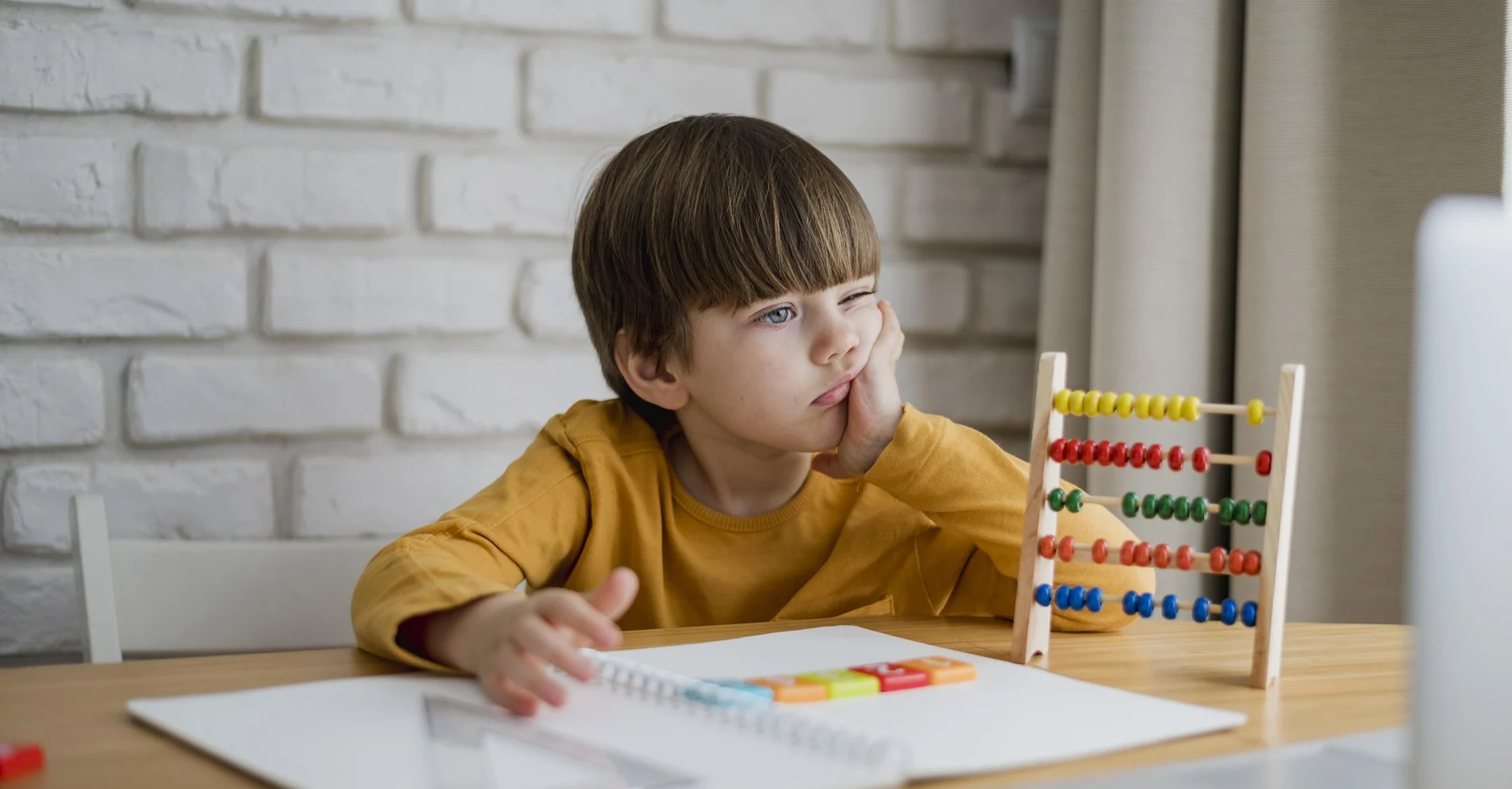
Screens are everywhere – tablets for homework, phones for entertainment, and televisions for family time. But as children spend more hours each day interacting with digital devices, many parents are asking an important question: how do screens affect their child’s ability to focus?
If you’ve noticed your child struggling with shorter attention spans, getting easily distracted during homework, or finding it difficult to sit still for reading time, you’re not alone. These concerns are shared by parents across the UK, and the relationship between screen time and concentration is more complex than many realise.
The good news? Understanding how screen time effects on children work can help you make informed decisions about managing screen time for kids. This guide explains what current research tells us about screens and focus, plus practical strategies you can implement at home to support your child’s developing attention span.
Small-group learning environments, like those we offer at PrimePlus UK, provide children with opportunities to practise sustained focus away from digital distractions. In our intimate 3-student groups, children develop concentration skills through engaging, face-to-face interactions that strengthen their ability to maintain attention on learning tasks.
In this guide, we’ll cover:
- Why Screen Time Affects Children Differently
- The Science Behind Screen Time and Concentration
- Signs Screen Time May Be Affecting Your Child’s Focus
- How Much Screen Time is Healthy for Under-11s?
- Practical Strategies for Parents to Manage Screen Time
- The Role of Small-Group Tutoring in Building Concentration
- Supporting Your Child’s Focus and Future Success
- Frequently asked questions
Why Screen Time Affects Children Differently
Young brains are still developing, making children under 11 particularly vulnerable to how screens affect focus. Unlike adult brains, children’s neural pathways are constantly forming new connections, and the rapid stimulation from digital devices can influence this development in significant ways.
The key difference lies in dopamine responses. Screens provide instant gratification – whether through colourful animations, immediate feedback, or quick rewards in games. This trains the brain to expect fast-paced stimulation, making it harder for children to engage with slower-paced activities like reading, homework, or creative play that require sustained attention.
However, not all screen time is equal. There’s a crucial distinction between active and passive screen use. Active screen time includes educational apps, interactive learning games, video calls with family, or creative digital tools where children actively engage and make decisions. Passive screen time involves activities like binge-watching videos, endless scrolling through content, or repetitive games that require minimal cognitive engagement.
Children under 11 are more susceptible to attention difficulties because their self-regulation skills are still forming. The prefrontal cortex, responsible for executive functions like planning, focus, and impulse control, doesn’t fully mature until the mid-twenties. This means young children have less natural ability to resist distractions or shift their attention back to tasks after interruptions.
Understanding these developmental differences helps parents recognise that screen time limits aren’t about restricting fun – they’re about protecting developing brains during a crucial period of growth.
The Science Behind Screen Time and Concentration
1Dopamine & Instant Gratification
Research shows that apps and games are specifically designed to trigger dopamine release through unpredictable rewards, bright colours, and satisfying sounds. This creates what scientists call “intermittent reinforcement” – the same psychological principle used in gambling.
When children regularly experience these quick dopamine hits, their brains become accustomed to instant gratification. This makes focusing on slower-paced tasks like reading comprehension, mathematical problem-solving, or creative writing feel unrewarding by comparison. The brain essentially becomes “trained” to crave rapid stimulation, making sustained concentration on academic tasks more challenging.
Studies have found that children who spend more than two hours daily on recreational screen time show measurable differences in brain scans, particularly in areas responsible for attention and impulse control.
2Blue Light and Sleep
The blue light emitted by screens suppresses melatonin production, the hormone that signals bedtime to our bodies. When children use devices close to bedtime, their sleep quality suffers significantly.
Poor sleep directly impacts attention span in children the following day. Sleep-deprived children show reduced working memory, difficulty processing information, and increased distractibility in classroom settings. Even losing just 30 minutes of sleep can affect a child’s ability to concentrate during learning activities.
The timing of screen use matters enormously – devices used within one hour of bedtime can delay sleep onset by up to 30 minutes and reduce overall sleep quality.
3Multitasking Myth
Many children develop habits of rapidly switching between apps, games, and videos – what adults often mistake for impressive “multitasking” abilities. However, research consistently shows that multitasking is actually “task-switching,” and it weakens sustained attention spans.
Each time the brain switches focus, it requires mental energy to refocus on the new task. Children who frequently task-switch while using devices often struggle to maintain prolonged focus on single activities like reading chapters, completing maths problems, or engaging in extended conversations.
Signs Screen Time May Be Affecting Your Child’s Focus
Recognising when screen time might be impacting your child’s concentration abilities is crucial for making informed adjustments to their digital habits.
Watch for difficulty sitting through homework sessions or reading time. If your child previously enjoyed books but now struggles to read for more than a few minutes, or if homework that once took 20 minutes now stretches to an hour with multiple breaks, these could be attention-related changes.
Classroom behaviour often reflects concentration challenges too. Teachers might report that your child seems easily distracted, has trouble following multi-step instructions, or appears restless during lessons that require sustained listening or independent work.
Emotional responses around device use provide important clues. Children who become irritable, anxious, or upset when asked to stop using screens may be developing unhealthy dependencies. Similarly, if your child struggles to engage in problem-solving games, puzzles, or creative play that they previously enjoyed, this might indicate changes in their ability to sustain attention on non-digital activities.
Physical restlessness can also signal attention difficulties. Children might fidget more during conversations, struggle to sit still during family meals, or have difficulty settling into quiet activities like drawing or building with blocks.
Sleep patterns offer another indicator – if your child takes longer to fall asleep, wakes frequently, or seems tired despite adequate sleep time, evening screen use might be affecting their rest quality and subsequent daytime concentration.
How Much Screen Time is Healthy for Under-11s?
The NHS doesn’t provide rigid screen time limits, emphasising instead that quality matters more than quantity when it comes to children’s digital experiences. However, most child development experts recommend no more than 1-2 hours of recreational screen time daily for primary school children.
This guideline focuses specifically on entertainment-based screen use – watching videos, playing games, or browsing content for fun. Educational screen time, video calls with family, or homework completed on devices aren’t typically included in these limits, though they should still be balanced with offline activities.
The most important principle is ensuring screen-free spaces and times throughout your child’s day. Bedrooms should remain device-free to protect sleep quality. Family meal times provide crucial opportunities for conversation and connection without digital distractions. Study periods work best when screens are limited to necessary educational tools only.
Creating age-appropriate rules helps children understand expectations while developing self-regulation skills. Younger children (ages 5-7) benefit from clear time limits with visual timers, while older primary school children (ages 8-11) can learn to self-monitor with guidance and family agreements.
Every family’s circumstances differ, and what works for one household might not suit another. The key is finding a balance that supports your child’s development, learning needs, and family values while recognising that some screen time can be beneficial when used thoughtfully.
Practical Strategies for Parents to Manage Screen Time
1Create Screen-Free Routines
Establishing consistent daily routines helps children develop healthy relationships with technology while protecting time for other important activities.
Start with homework-first policies – academic work gets completed before recreational screen time begins. This approach ensures that concentration-demanding tasks happen when children’s attention spans are strongest, rather than after they’ve already experienced the rapid stimulation of games or videos.
Implement bedtime cut-offs by removing all screens at least one hour before sleep time. Use this period for calming activities like reading together, gentle conversations, or quiet play. Create a charging station outside bedrooms where all family devices “sleep” overnight.
Transform meal times into screen-free zones that encourage family conversation and mindful eating. These protected times help children practise sustained attention during face-to-face interactions while building important social skills.
Morning routines benefit from delayed screen access too – encourage children to complete getting dressed, eating breakfast, and preparing for school before any recreational screen time begins. This helps establish productive daily rhythms and prevents morning screen time from interfering with essential tasks.
Consistency matters more than perfection. When children understand that certain times and spaces are always screen-free, they adapt their expectations and often engage more readily in alternative activities.
2Swap Passive Screen Time with Active Alternatives
Reducing passive screen consumption while maintaining engaging activities prevents children from feeling deprived while building concentration skills through enjoyable alternatives.
Encourage creative play through art supplies, building materials, dress-up clothes, or musical instruments. These activities require sustained attention and problem-solving skills while providing the satisfaction that screens often deliver. Rotate available materials regularly to maintain novelty and interest.
When screen time does occur, prioritise active digital experiences. Educational apps that require decision-making, creative software for drawing or music-making, or interactive quiz games provide cognitive engagement rather than passive consumption.
Outdoor activities offer natural concentration-building opportunities through exploration, physical challenges, and sensory experiences. Garden projects, nature scavenger hunts, or playground games help children practise focusing on real-world environments.
Family reading time, board games, or puzzle solving create shared experiences that build attention spans while strengthening relationships. These activities teach children that sustained focus can be social and enjoyable.
Cook together, build models, or work on craft projects that require following multi-step instructions and maintaining attention over extended periods. These practical life skills naturally develop concentration abilities.
3Use Tools and Boundaries
Technology itself can support healthy screen time management when used thoughtfully alongside clear family expectations.
Parental control apps and built-in device timers help enforce agreed-upon limits without requiring constant supervision. Visual timers help younger children understand remaining screen time and prepare for transitions to other activities.
Create family media agreements that involve children in setting rules rather than imposing restrictions. When children participate in creating guidelines, they’re more likely to follow them and understand the reasoning behind boundaries.
Model healthy digital behaviour yourself – children learn more from observing adult habits than from listening to rules. Use devices purposefully, take regular breaks, and demonstrate that adults also benefit from screen-free time for reading, conversation, and other activities.
Establish clear consequences that focus on natural results rather than punishments. If screen time rules aren’t followed, the logical consequence is reduced access the following day, helping children learn self-regulation skills.
Provide plenty of advance warning before screen time ends, using 10-minute and 5-minute warnings to help children transition more easily to other activities.
4Encourage Focus-Building Activities
Deliberately practising concentration through enjoyable activities strengthens children’s ability to maintain attention across all areas of their lives.
Mind mapping, journaling, and problem-solving games make thinking visible and engaging. These activities require sustained mental effort while providing clear evidence of accomplishment and progress.
Reading aloud together builds listening skills, imagination, and attention span gradually. Start with shorter books and gradually work towards longer chapter books, celebrating progress along the way.
Introduce meditation or mindfulness activities designed for children – short breathing exercises, body awareness games, or guided imagery can strengthen attention control while providing useful stress management tools.
Small-group learning environments, like those offered in our tutoring programmes, provide structured opportunities for children to practise sustained focus through interactive education. In groups of just three students, children can’t hide from engagement but don’t feel overwhelmed by large class dynamics. Our tutors break learning into manageable focus “chunks” that gradually build concentration stamina while maintaining engagement through varied activities and peer interaction.
The Role of Small-Group Tutoring in Building Concentration
Small-group tutoring offers unique advantages for developing concentration skills that larger classrooms and individual study sessions cannot replicate.
Groups of three students create the ideal balance – large enough to provide peer interaction and motivation, but small enough to ensure every child remains actively engaged throughout sessions. There’s no opportunity to zone out or hide, but also no overwhelming pressure that larger groups can create.
Expert tutors understand how to break learning into manageable focus periods that match children’s developmental attention spans. Rather than expecting 45-minute concentration periods, sessions alternate between different types of activities – discussion, individual work, collaborative problem-solving, and movement breaks – keeping children engaged while gradually building their capacity for sustained attention.
The face-to-face interaction inherent in small-group learning helps children develop real-world concentration skills that transfer to classroom settings and homework time. Unlike screen-based learning, these sessions require children to maintain attention on human voices, interpret facial expressions, and engage in back-and-forth conversations that strengthen listening and focusing abilities.
Social learning environments naturally encourage sustained attention because children want to participate in group activities and contribute to discussions. This intrinsic motivation supports longer focus periods than children might achieve working alone.
Our 3-student model helps children learn to concentrate in fun, supportive sessions where they can build confidence while developing essential attention skills.
Book a Free Assessment today to discover how small-group learning can support your child’s focus development.
Supporting Your Child’s Focus and Future Success
Screen time isn’t inherently “bad” for children, but understanding how screens affect focus helps parents make informed decisions about managing screen time for kids. The key lies in recognising that developing brains need balance – digital experiences alongside plenty of offline activities that build concentration, creativity, and real-world engagement skills.
By implementing consistent routines, choosing active over passive screen time, and providing engaging alternatives, parents can protect their children’s developing attention spans while still embracing the benefits that technology offers. Remember that attention span in children develops gradually, and every small step towards healthier digital habits contributes to long-term learning success.
For children under 11, the combination of thoughtful screen time limits and rich face-to-face learning experiences provides the strongest foundation for academic achievement and lifelong concentration skills. Small-group learning environments offer particularly valuable opportunities to strengthen focus abilities while building confidence and social skills.
Frequently Asked Questions
Does screen time really affect concentration?
Yes – research shows that excessive passive screen time can shorten attention spans, particularly in children under 11. The rapid stimulation from games and videos trains the brain to expect instant gratification, making it harder to focus on slower-paced learning activities.
What’s the ideal daily screen time for children?
Most experts recommend 1-2 hours of recreational screen time daily for primary school children, balanced with reading, creative play, and outdoor activities. Quality matters more than exact time limits – active, educational screen use is more beneficial than passive consumption.
How can I tell if my child has too much screen time?
Watch for irritability when device time ends, difficulty focusing on homework or reading, restlessness during non-screen activities, and problems falling asleep. If your child struggles to engage in creative play or problem-solving games they previously enjoyed, screen time might be affecting their attention span.
Can educational screen time still be helpful?
Yes – interactive learning apps, creative digital tools, and educational videos can support development when used in moderation. The key is choosing active screen experiences that require decision-making and engagement rather than passive watching or repetitive games.
How does tutoring help reduce screen dependency?
Small-group learning builds concentration skills through face-to-face interaction, structured activities, and peer engagement. Children practise sustained attention on learning tasks while developing social skills and confidence away from digital devices.
Support your child’s concentration development and academic confidence through expert small-group tutoring.
Book a Free Assessment today to discover how our supportive 3-student sessions can help your child thrive.