Blurting revision is a simple way to test your memory: choose a topic, close your notes, and write down everything you can remember on a blank page. Then open your notes, check what you wrote, and add anything you missed or got wrong in a different colour. The gaps show you exactly what to revise next. It works because it forces you to recall information from memory, rather than simply rereading it.
This step-by-step guide is for GCSE and A-Level students who want a quick, low-tech revision routine.
Key takeaways
- Blurting is a form of retrieval practice: you recall first, then check.
- Practice testing was one of two techniques given the highest overall utility rating in Dunlosky and colleagues’ 2013 review of learning strategies.
- Use a different colour for corrections, so the gaps are visible at a glance.
- Blurt the same topic again a few days later to see if the gaps have closed.
- Turn persistent gaps into flashcards or practice questions.
In this guide, we’ll cover:
- What is blurting revision?
- The blurting method step by step
- What a blurt looks like: a worked example
- Blurting by subject
- Retrieval practice for GCSE: why the struggle helps
- How to use the gaps
- A weekly blurting routine
- Common blurting mistakes
- How parents can help
- Frequently asked questions
- Start with one topic tonight
What is blurting revision?
“Blurting” is a name students use for a brain dump: writing out everything you know about a topic from memory, without looking at anything. It is not a formal technique with its own research, but it is a practical form of something that is well researched: retrieval practice, or practice testing.
A widely cited 2013 review by John Dunlosky and colleagues looked at ten common learning techniques. Practice testing and distributed practice (spreading study out over time) received the highest overall utility rating, according to the Association for Psychological Science’s summary. If you repeat a blurt over several days, you get both: testing yourself, spread out over time.
For the broader principle, see our guide to active recall revision.
The blurting method step by step
- Pick a small topic. “Photosynthesis” or “Macbeth Act 1” works; “all of biology” does not. One lesson’s worth of content is a good size.
- Close everything. Notes, textbook and phone away.
- Write for a set time. Set a timer for 5 to 10 minutes and write everything you remember: facts, keywords, diagrams, equations, quotes. Use bullet points or a quick mind map. Do not worry about neatness.
- Keep going when it slows. When you run dry, prompt yourself: what are the key terms? What would an exam question ask? What did the teacher draw on the board?
- Check against your notes. Open your notes or textbook and compare. Tick what is correct.
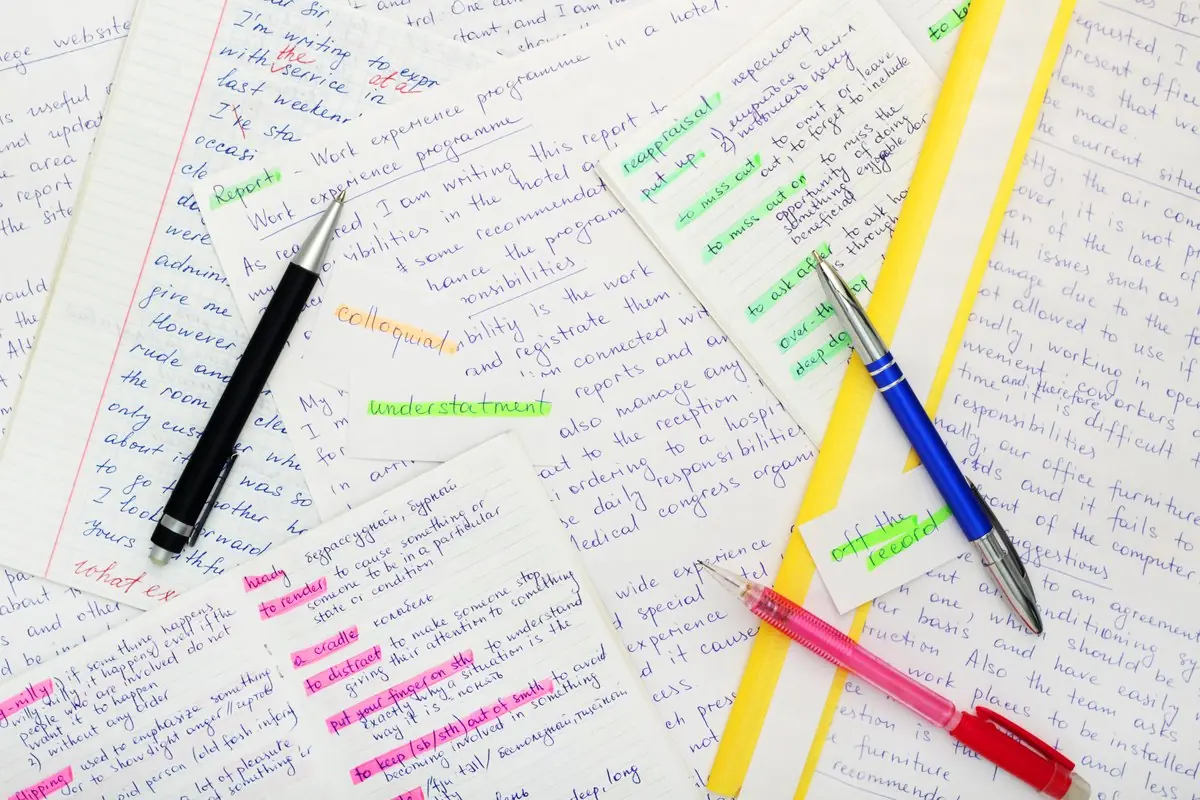
- Fill the gaps in a different colour. Add what you missed and correct what you got wrong in green or red pen.
- Review the coloured parts. These are your revision priorities. Spend a few minutes learning them.
- Repeat later. Blurt the same topic two days later on a fresh page. Fewer coloured additions means it is sticking.
The whole routine takes 15 to 25 minutes per topic.
What a blurt looks like: a worked example
Imagine a Year 10 student blurting GCSE photosynthesis for eight minutes. In black pen, they might write: “Plants make glucose. Needs light, carbon dioxide and water. Happens in chloroplasts. Chlorophyll is green and absorbs light. Oxygen is a waste product. Limiting factors: light, temperature.” They might also sketch a leaf with stomata labelled.
When they open their notes, the check reveals the gaps. In green pen they add: the word equation (carbon dioxide + water → glucose + oxygen), the fact that photosynthesis is endothermic, carbon dioxide concentration as a third limiting factor, and how glucose is then used by the plant (respiration, starch for storage, cellulose for cell walls, and so on). They also correct “temperature” by noting that it affects the enzymes involved.
The green writing is now their to-do list. They make four flashcards from it, and blurt the topic again two days later. If the second attempt has only one or two green additions, the topic is in good shape. If the same gaps reappear, it is time to relearn that part properly, perhaps with a practice exam question or a short explanation from a teacher.
Notice that the first blurt was not “bad”. Getting most of the basics in black and seeing exactly what is missing is the method working as intended.
Blurting by subject
| Subject | What to blurt | Tip |
|---|---|---|
| Biology, chemistry, physics | Processes, definitions, labelled diagrams, equations with units | Draw the diagram from memory, then check every label |
| Maths | Formulae, methods, a worked example | Blurt the steps of a method, then try a question to test it |
| English Literature | Quotes, themes, character points, context | Blurt quotes by character or theme; check wording exactly |
| History and geography | Dates, causes, consequences, case study facts | Use a timeline or cause-and-effect layout |
| Languages | Vocabulary for a topic, verb endings | Write words in both languages; check spelling and accents |
Retrieval practice for GCSE: why the struggle helps
Blurting can feel uncomfortable, because you see how much you have forgotten. That discomfort is useful. Rereading notes feels productive because the information looks familiar, but familiarity is not the same as being able to recall it in an exam. Blurting shows you what you can actually produce on a blank page, which is what an exam asks for.
It also gives you an honest revision list. Instead of revising a whole topic again, you focus on the coloured parts.
How to use the gaps
The coloured corrections are the most valuable part of the page. Do something with them:
- Make flashcards for facts and definitions you missed. Our guide to making flashcards that work explains how.
- Practise exam questions on that subtopic, so you use the knowledge, not just recall it.
- Build a mind map if the gaps are about how ideas connect; see our mind mapping guide.
- Keep your blurt sheets. Comparing a first and third attempt is motivating.
A weekly blurting routine
Blurting works best as part of a regular schedule rather than a one-off.
| Day | Activity |
|---|---|
| Monday | Blurt topic A; check and fill gaps |
| Tuesday | Blurt topic B; flashcards from topic A gaps |
| Wednesday | Re-blurt topic A; blurt topic C |
| Thursday | Re-blurt topic B; practice questions on topic A |
| Friday | Re-blurt topic C |
| Weekend | Exam questions mixing A, B and C |
This pattern revisits each topic over several days, which spreads out the practice.
Common blurting mistakes
- Peeking. Glancing at notes during the blurt turns it into copying.
- Choosing topics that are too big. You end up writing vague headlines rather than detail.
- Skipping the check. Always check, so that anything you wrote wrongly gets corrected straight away.
- Not repeating. One blurt shows the gaps; repeating it closes them.
- Blurting topics you have not learnt yet. You need something to recall first. Blurting is for revising, not first learning.
How parents can help
Parents can support blurting without knowing the subject. Offer to time the blurt, then sit with your child while they check it, asking “What did you miss? Why do you think you forgot that one?” Praise the honesty of the coloured corrections rather than the amount of black pen. A teenager who happily shows you a page covered in green is doing it properly.
Frequently asked questions
Does blurting revision actually work?
Blurting is a form of retrieval practice, and practice testing received the highest overall utility rating in a widely cited 2013 review by Dunlosky and colleagues. It works best when you check your blurt carefully against notes, fill the gaps, and repeat it after a few days. Without the checking and repeating, it is much less useful.
How long should you blurt for?
Five to ten minutes of writing is usually enough for one small topic, followed by about the same time checking and filling gaps. If you run out of things to write after two minutes, the topic may need relearning first. If you are still writing after fifteen minutes, choose a smaller topic.
Is blurting better than flashcards?
They do different jobs and work well together. Blurting shows what you can recall about a whole topic and how ideas connect. Flashcards drill specific facts. A good routine is to blurt a topic, turn the gaps into flashcards, and use those cards for daily review.
Can you use blurting for maths?
Yes, for formulae, definitions and the steps of methods. Write the formulae and method steps for a topic from memory, check them, then test yourself with an exam question. Maths also needs plenty of practice questions, so use blurting alongside them rather than instead.
Start with one topic tonight
Blurting needs nothing but paper, two pens and ten minutes. Try it on one topic this week and repeat it a few days later. If your child would like more structured help with revision habits, our GCSE tuition in Milton Keynes can help build strong revision habits. To find the right starting point, book a free assessment.
Next step: Book a free assessment with PrimePlus and we will identify gaps, explain where your child is now and suggest a clear plan. Book your free assessment.