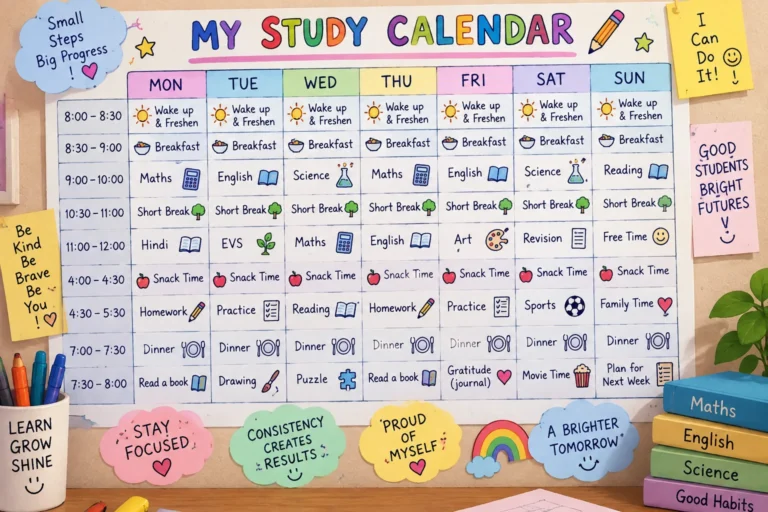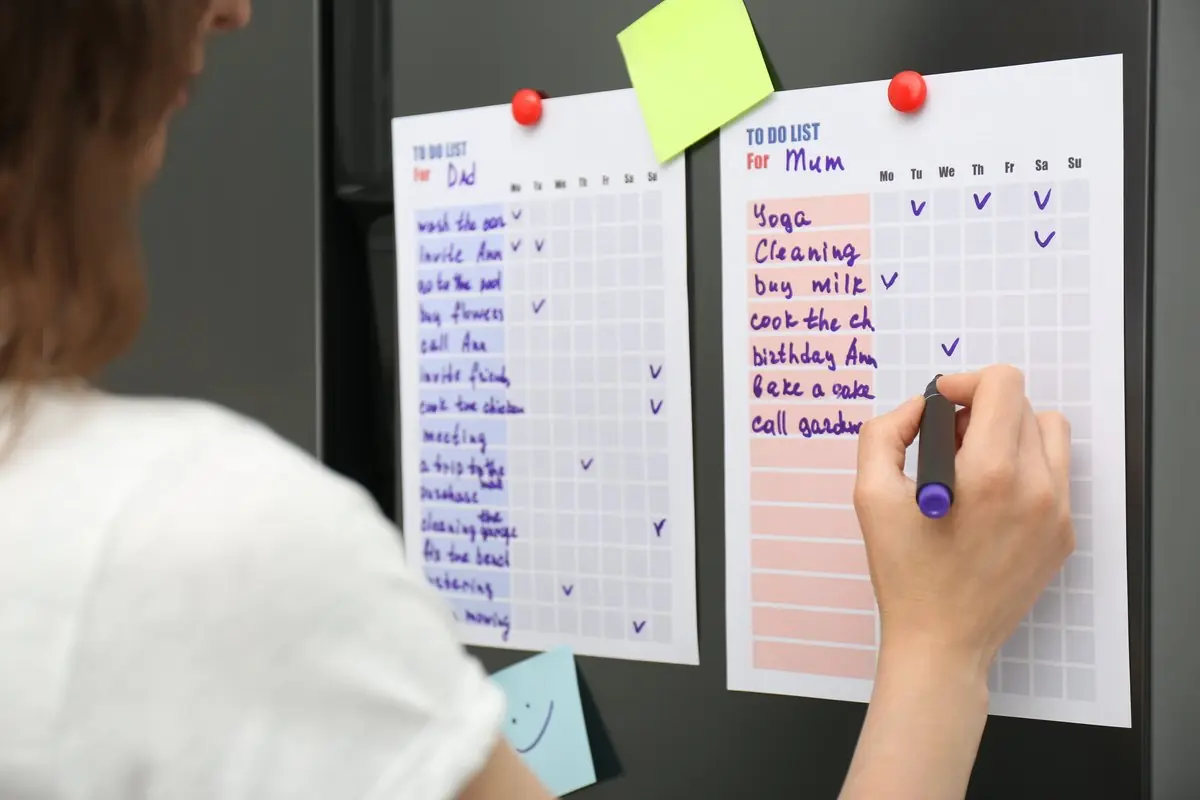
The most useful ADHD homework strategies are simple and structured. NHS guidance suggests breaking tasks such as homework into short slots of 15 to 20 minutes with breaks between them, giving instructions one at a time, clearly and simply, in a calm voice, writing a to-do list and keeping it somewhere easy to see, and praising good behaviour or using a reward chart. Add a predictable routine, a calm workspace and regular contact with the school’s special educational needs co-ordinator (SENCO), and homework can become a manageable part of the day rather than a battle.
Key takeaways
- NHS guidance suggests short 15 to 20 minute homework slots with breaks in between.
- Give one instruction at a time, clearly, simply and calmly.
- A visible to-do list and praise or a reward chart are part of the same NHS advice.
- Exercise, regular sleep and regular mealtimes are also in the NHS guidance for parents.
- Talk to the school SENCO about classroom and homework support.
In this guide, we’ll cover:
- Why homework can be hard with ADHD
- Strategy 1: short slots with breaks
- Strategy 2: one instruction at a time
- Strategy 3: a visible to-do list
- Strategy 4: praise and rewards
- Strategy 5: a predictable routine and workspace
- When a session goes wrong
- Working with the school
- A sample homework session
- Where to find more support
- Frequently asked questions
- Keeping a simple homework log
- Next steps
Why homework can be hard with ADHD
According to the NHS page on ADHD, the condition can affect a person’s ability to pay attention (being inattentive), their energy levels (being hyperactive), and their ability to control their impulses (being impulsive). Homework can draw on all three: settling down, staying with a task, and resisting distractions.
These are everyday home routines; you can try them while you talk to school.
Strategy 1: short slots with breaks
The NHS suggests breaking tasks such as homework into short 15 to 20 minute slots, with breaks between them. In practice:
- Look at the whole task together and split it into chunks that fit a slot.
- Set a timer for the slot. Use a timer your child can see.
- When the timer goes, take a short break: a drink, a stretch, a quick walk round the garden.
- Start the next slot with the next chunk.
A maths sheet of 20 questions might become two slots of 10 questions. An essay might become: plan (slot 1), first half (slot 2), second half and check (slot 3).
Make breaks short and physical
Plan the break before the slot starts, so it is a reward to look forward to rather than a negotiation. Physical breaks fit well with the NHS advice to make time for physical activities children enjoy, as exercise is a good focus for their energy.
Strategy 2: one instruction at a time
The NHS advises giving instructions one at a time, clearly and simply, in a calm voice. Compare:
| Instead of | Try |
|---|---|
| “Get your bag, find your homework, sit down and start on the maths.” | “Please get your bag.” Then, when done: “Now find your maths sheet.” |
| “Why haven’t you started yet?” | “Let’s read question 1 together.” |
| “Do your homework properly this time.” | “Write the date and title, then try question 1.” |
Strategy 3: a visible to-do list
The NHS suggests writing a to-do list and keeping it somewhere easy to see. For homework, that might be:
- a whiteboard by the desk listing tonight’s tasks in order;
- sticky notes, one per task, moved to a “done” column when finished;
- a weekly planner on the fridge showing what is due when.
Strategy 4: praise and rewards
The NHS advises praising good behaviour, or using a reward chart. Specific praise tells your child exactly what went well: “You stayed on that for the whole timer, well done.”
A simple reward chart might give a sticker for each completed slot, with a small agreed reward after a set number of stickers. Keep the target achievable.
Strategy 5: a predictable routine and workspace
Ideas:
- Same time, same place: for example, homework after a snack and a short run-around.
- Clear the desk: only the things needed for the current task.
- Reduce distractions: phones and tablets in another room unless needed.
- Everything ready: pens, ruler, calculator and planner in a box by the desk.
Our guide to avoiding homework battles with an after-school routine has more on building a routine that sticks.
Look after the basics
The NHS also recommends encouraging regular sleep and helping children have a healthy, balanced diet and regular mealtimes. A snack before starting and a consistent bedtime fit this advice.
If certain foods seem to make symptoms worse, the NHS suggests keeping a food and drink diary and sharing it with the school.
When a session goes wrong
Some evenings will not go to plan. If your child is overwhelmed, stop the slot, take a break, and restart with a smaller chunk, such as one question rather than five. Keep your voice calm, in line with the NHS advice about instructions. Afterwards, note what happened: the time, the task and what seemed to trigger the difficulty. You can share these notes with the school.
Working with the school
The NHS describes the school’s SENCO as the person who can discuss support for your child in the classroom and with homework. Things worth raising:
- How much homework is expected, and roughly how long it should take.
- Whether homework can be broken down, shortened or given with clearer instructions.
- How homework is set and recorded, so you can see it at home.
- What strategies work for your child in class that you could use at home, and the other way round.
Share what works at home, such as short timed slots, with the SENCO.
If you are worried about ADHD
The NHS suggests starting by speaking to your child’s teacher, who will usually refer them to the SENCO. If you are still worried, you can see a GP. Ask the GP or SENCO how to request an ADHD assessment if support is not helping. Assessments are carried out by specialists such as a paediatrician or a child and adolescent psychiatrist.
A sample homework session
| Time | What happens |
|---|---|
| 4:00 | Snack and 15 minutes outside |
| 4:15 | Check the to-do list together; set out materials |
| 4:20 | Slot 1 (15 minutes): first chunk |
| 4:35 | Movement break; sticker on the chart |
| 4:40 | Slot 2 (15 minutes): second chunk |
| 4:55 | Tick off the list; specific praise; pack the bag for tomorrow |
Adjust the times to your family. The structure, not the exact clock, is what matters. Our post on supporting your child’s learning at home covers how to fit learning around the rest of family life.
Where to find more support
The NHS page lists organisations including ADHD UK and Young Minds, which offers mental health support for young people and parents.
Frequently asked questions
How long should a child with ADHD do homework for at a time?
NHS guidance suggests breaking tasks such as homework into short slots of 15 to 20 minutes, with breaks between them. Start at the shorter end if your child struggles, and plan each break before the slot begins.
How can I help my child with ADHD focus on homework?
Give one instruction at a time, clearly and calmly; keep a to-do list where it is easy to see; use a timer for short slots; clear the desk of distractions; and praise effort straight away. The NHS also recommends regular exercise, sleep and mealtimes.
Should I talk to the school about ADHD and homework?
Yes. The NHS describes the school SENCO as someone who can discuss support for your child in class and with homework. Share what works at home and ask how homework could be broken down or explained more clearly.
Where can parents find support for ADHD?
The NHS ADHD page lists organisations including ADHD UK and Young Minds, which offers mental health support for young people and parents. Your child’s teacher and the school SENCO are also the people the NHS suggests starting with if you have concerns.
Keeping a simple homework log
For two weeks, jot down a line after each homework session: the subject, how many slots it took, what helped and what got in the way. Bring the log to a meeting with the SENCO. It gives you both specific examples to discuss, rather than general impressions, and makes it easier to agree changes that you can try at home and in class.
Next steps
Choose two strategies to try this week, such as short timed slots and a visible to-do list, and keep them the same every day. If your child would benefit from structured support with schoolwork, look at our tuition courses, which include small-group and online tuition, or book a free assessment.
Next step: Book a free assessment with PrimePlus and we will identify gaps, explain where your child is now and suggest a clear plan. Book your free assessment.