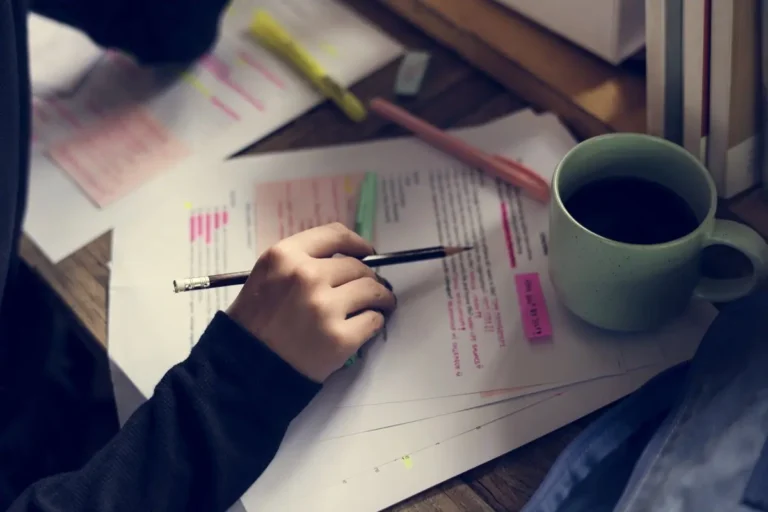
The best way to handle unseen poetry at GCSE is to use the same fixed routine every time: read the poem twice, work out what is literally happening and who is speaking, find the moment where something shifts, then pick three or four details to analyse closely. Because you cannot know the poem in advance, the method is what you revise. With AQA, the unseen section has two questions, one on a single poem for 24 marks and a comparison with a second poem for 8 marks, so the routine also needs to fit the time.
Key takeaways
- AQA Literature Paper 2, Section C, has a question on one unseen poem (24 marks) and a question comparing it with a second unseen poem (8 marks).
- Spend the first few minutes reading, not writing: twice through before any annotation.
- A six-step routine (literal sense, voice, shift, images, form, final line) works on any poem.
- The question’s focus tells you what to look for, so read it before the poem.
- For the 8-mark comparison, focus on methods: how the two poets present the idea differently.
In this guide, we’ll cover:
- What is the unseen poetry question in GCSE English Literature?
- Read the question before the poem
- The six-step routine for any unseen poem
- Writing the 24-mark answer
- Handling the 8-mark comparison
- How to practise unseen poetry before the exam
- Common mistakes in unseen poetry answers
- Frequently asked questions
- Start this week
What is the unseen poetry question in GCSE English Literature?
In AQA GCSE English Literature, unseen poetry is Section C of Paper 2, a 2 hour 15 minute paper that also includes the modern text and the poetry anthology. AQA’s specification says students answer one question on one unseen poem, then one question comparing this poem with a second unseen poem. On AQA’s question papers these are worth 24 marks and 8 marks.
| Question | Marks | What it asks | Our suggested time |
|---|---|---|---|
| Single poem | 24 | How the poet presents an idea, feeling or experience | About 30 minutes |
| Comparison | 8 | Similarities and differences in the methods the two poets use | About 15 minutes |
The timings are a sensible split of the remaining paper time, not an official rule.
Read the question before the poem
Each question names a focus: for example, how the poet presents the speaker’s feelings about a place, or about growing older. Underline the key words. When you read the poem, you are now reading with a purpose, looking for evidence that speaks to that focus. This one habit stops most answers drifting into a line-by-line summary.
The six-step routine for any unseen poem
Use these steps in the same order every time you practise, so that in the exam they happen almost automatically.
- Literal sense. After the first read, write one sentence in the margin: what is happening? “A speaker watches her father mending a fence.” If you cannot do this yet, read again.
- Voice. Who is speaking, to whom, and in what tone: tender, bitter, amused, nostalgic? Pronouns help: “I”, “you”, “we”.
- Shift. Find where something changes: a “but”, a new stanza, a change of tense, a question. If the poem turns, analyse the turn closely.
- Images. Choose two or three striking pictures or phrases connected to the question’s focus. Ask what each one suggests.
- Form and structure. Notice stanza shape, line length, rhyme or its absence, repetition, and where lines break. Link anything you notice to meaning.
- Final line. Read the last line or two again. Ask: what does the poem leave us with?
The whole routine should take about five to seven minutes. Your annotations should be single words or arrows, not sentences.
A short practice example
Here is a brief original practice poem to try the routine on:
My grandmother’s kitchen kept the summer:
jam jars lined like soldiers on the sill,
the kettle’s endless whistle, warm and close.
Now strangers paint the door a sharper blue,
and every window shows me someone else’s light.
- Literal sense: the speaker remembers a grandmother’s kitchen; the house now belongs to someone else.
- Voice: first person, fond then wistful.
- Shift: “Now” in line 4 moves from memory to present loss.
- Images: “kept the summer” makes the kitchen a store of warmth and time; “someone else’s light” suggests the speaker is shut outside her own past.
- Form: one stanza, unrhymed; the last line is longest, as if the loss stretches on.
- Final line: the poem ends outside, looking in.
Writing the 24-mark answer
A clear structure helps examiners follow your thinking. Try this:
- Opening overview (2 to 3 sentences). Answer the question directly: what the poet presents and how the poem develops. “The poet presents memory as both comforting and painful: the warm past of the kitchen is set against a present in which the speaker is an outsider.”
- Three analytical paragraphs. Each built around one idea, with a short quotation, close analysis of a word or technique, and its effect.
- A paragraph on structure. The shift, the ending, the shape of the poem.
Short quotations are best. In the example, analysing the single word “kept” (as if the kitchen preserved summer like the jam in its jars) says more than copying out the whole line.
Be willing to offer tentative readings. Phrases like “this could suggest” or “perhaps the poet implies” are fine, as long as you support them with evidence.
Handling the 8-mark comparison
The second question gives you another unseen poem on a related idea and asks you to compare the methods the two poets use. With only about 15 minutes, keep it focused.
- Read the second poem twice and apply steps 1, 3 and 5 of the routine quickly.
- Find one or two clear differences in method: first person versus third person, a regular form versus free verse, a hopeful ending versus a bleak one.
- Write two or three comparative paragraphs, each mentioning both poems, using linking words such as whereas, similarly and in contrast.
Do not spend this time re-analysing the first poem in depth. You have already done that work in the 24-mark answer.
How to practise unseen poetry before the exam
Because the poem is new, practice should be about variety. Our guide on learning quotes for GCSE English Literature covers the anthology, but unseen practice is different:
- One new poem a week. Choose short poems from anthologies, poetry websites or AQA’s past papers. Apply the routine in seven minutes.
- Write one paragraph on the most interesting image, in ten minutes.
- Once a fortnight, write a full 24-mark answer in 30 minutes.
- Read aloud. Hearing rhythm and pauses makes structure much easier to discuss.
The close reading skills are shared with English Language, where you also analyse unseen texts. Our English Language Paper 1 guide uses a similar zoom-in approach for prose.
Common mistakes in unseen poetry answers
| Mistake | What to do instead |
|---|---|
| Writing a line-by-line summary | Organise paragraphs by idea, using the question’s focus |
| Naming techniques without effects | Follow every technique with what it suggests |
| Panicking at an unfamiliar word | Use context; skip it if you need to, and write about what you do understand |
| Ignoring the ending | Always comment on the final lines |
| Spending too long on the 24-marker | Watch the clock; leave time for the comparison |
Frequently asked questions
Can you revise for unseen poetry?
You cannot revise the poem itself, but you can revise a method and build reading skills. Practising a fixed routine on a new poem each week makes the exam feel familiar. Reading a wide range of poetry also helps, because you get used to different voices, forms and kinds of imagery.
What if I do not understand the unseen poem?
Start with what you do understand: the situation, the speaker and one or two striking images. Read it a second and third time. Offer interpretations tentatively, using phrases like “this could suggest”, and support them with evidence. A thoughtful partial reading is better than a blank page.
How much should I write for the 8-mark question?
Aim for two or three focused paragraphs in around 15 minutes. The question rewards comparing how the poets use methods, so each paragraph should discuss both poems. You should not repeat analysis of the first poem at length.
Do I need to know poetic terms for unseen poetry?
A handful of terms used accurately helps, such as metaphor, enjambment, caesura, rhyme scheme and volta. But the term on its own earns little. Explaining what a feature does to the meaning or the reader is what matters, so a clear explanation without a term is better than a term without an explanation.
Start this week
Find one short poem you have never read, set a timer for seven minutes, and work through the six steps. Then write a single paragraph. If you would like structured feedback on your poetry writing, our GCSE English tuition in Milton Keynes offers small-group and online tuition, and you can book a free assessment to begin.
Next step: Book a free assessment with PrimePlus and we will identify gaps, explain where your child is now and suggest a clear plan. Book your free assessment.