Good 11 plus timing comes from three things: knowing the content well enough that easy questions are quick, knowing when to move on from a hard one, and being practised at recording answers on a separate sheet. Many children who score well in untimed practice lose marks in the real test because they run out of time, not knowledge. The fix is to build speed in stages, from accurate untimed work to short timed sets to full mock papers, rather than jumping straight to the clock.
The September 2026 tests have now been sat, so this guide is aimed at Year 5 families preparing for the next test at the start of Year 6.
This guide is written for families preparing for the Buckinghamshire transfer test, but the methods apply to any timed multiple-choice 11 plus.
Key takeaways
- The Bucks test has two papers of about 45 minutes each, with multiple-choice answers on a separate answer sheet.
- Accuracy comes before speed: timing practice only helps once the content is secure.
- Build speed in stages: untimed, then timed short sets, then full papers.
- Practise the answer sheet itself: marking cleanly, keeping your place and changing an answer.
- Teach a “move on” rule so one hard question does not cost five easy ones.
In this guide, we’ll cover:
- What timing pressure looks like in the Bucks test
- Why children run out of time
- Building 11 plus speed in three stages
- 11 plus answer sheet practice
- The “move on” rule
- How to run a mock 11 plus test at home
- Pacing checkpoints
- A sample eight-week timing plan
- Frequently asked questions
- Practise smarter, not longer
What timing pressure looks like in the Bucks test
Buckinghamshire Council’s testing process page explains that the test has two papers, each about 45 minutes long, sat on separate days. One covers verbal skills; the other combines maths with non-verbal reasoning. Answers are marked on a separate multiple-choice answer sheet.
Two features make timing a real challenge. First, children must switch between question types within a paper, which takes mental effort. Second, answering on a separate sheet adds a small step to every question. Neither is hard on its own, but over 45 minutes both add up. Our guide to maths in the Bucks transfer test covers what the maths section contains.
Why children run out of time
Children who run short of time usually fit one of these patterns. Watching a practice session closely tells you which.
| Pattern | What you see | What helps |
|---|---|---|
| Content gaps | Long pauses on particular question types | Untimed topic practice before any timing work |
| Over-checking | Rereads every question and answer several times | One check only, at the end if time allows |
| Getting stuck | Spends minutes on one hard question | A clear “move on” rule |
| Slow recording | Fiddles with the answer sheet, loses place | Answer-sheet practice |
| Slow reading | Rereads long verbal questions to understand them | Regular reading for pleasure; vocabulary building |
| Rushing at the start, panicking at the end | Careless early errors, then freezes | Pacing checkpoints during the paper |
Building 11 plus speed in three stages
Stage 1: accuracy without a clock
Work on question types untimed until your child gets most right. If accuracy is low, timing practice only rehearses mistakes faster. For verbal reasoning, our top verbal reasoning tips help here.
Stage 2: short timed sets
Next, time small sets of one question type, for example ten maths questions or fifteen verbal analogies. Record how long the set takes and the score. Over a few weeks, aim to keep the score steady while the time drops. Short sets are less tiring than full papers and give quick feedback.
Stage 3: full timed papers
In the final months before the test, use full-length practice papers under realistic conditions, with a separate answer sheet. One a week, or one a fortnight, is plenty. Mark them together and look at where time was lost, not just the score.
11 plus answer sheet practice
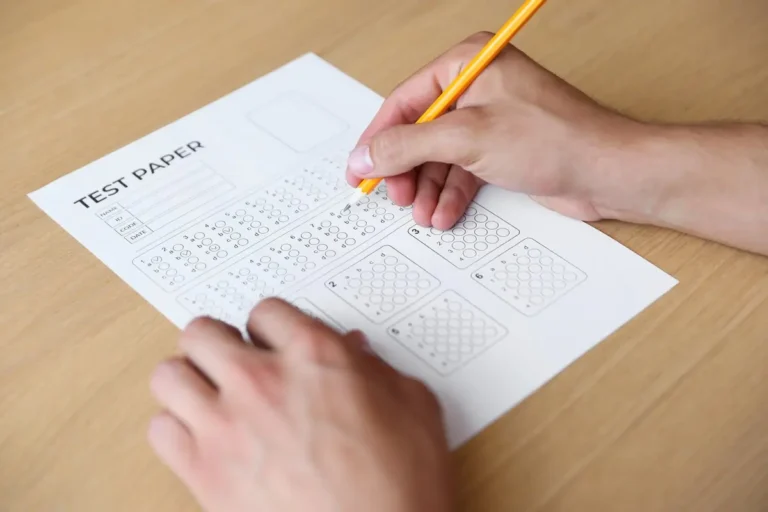
A separate answer sheet may be new to your child. It is a small skill, but one that can cost marks if it is new on the day.
- Mark clearly. Practise making a firm, neat mark in the box or space, using the method the practice paper specifies.
- Keep your place. After each answer, check that the question number on the sheet matches the question in the booklet.
- Change answers cleanly. Practise rubbing out completely so only one answer remains.
- Do not leave gaps by mistake. If a question is skipped, leave a small mark in the booklet (not the sheet) to find it later, and take extra care that the next answer goes in the right row.
- Record as you go, not in a batch at the end, which risks running out of time with answers unrecorded.
The “move on” rule
In a practice paper where each question carries one mark, an easy question is as valuable as a hard one. A simple rule helps: if you have read a question twice and still have no idea how to start, mark the question in the booklet and move on. Come back if time allows.
Practise this rule in Stage 2 and 3 sessions. Many children find it hard to leave a question unfinished, so it needs rehearsing, with praise for moving on rather than for persistence.
How to run a mock 11 plus test at home
- Choose a time of day when your child is fresh, such as a weekend morning.
- Set up a clear table away from siblings, screens and noise.
- Use the right kit: pencils, an eraser, the booklet and a separate answer sheet. Put a clock where your child can see it.
- Read the instructions aloud as an invigilator would, then start the timer.
- No help during the paper. If your child asks a question, say “do your best and move on”.
- Stop at the time limit, even if unfinished. Note where they reached.
- Mark together the next day, when both of you are fresh. Look for patterns: which sections took longest, which errors were careless.
Keep mocks occasional. Too many full papers can be draining and make a child dread the test. A calm routine in the final week matters too; see our guide to the 11 plus test day and final week.
Pacing checkpoints
Teach your child to glance at the clock at set points, for example a quarter of the way through the time and halfway, and compare with how many questions they have done. If they are well behind at halfway, it is a cue to apply the move-on rule more firmly. Practice papers that show the number of questions make it easy to agree checkpoints in advance.
A sample eight-week timing plan
For a child who is accurate but slow, this plan fits into the summer before the test, with three or four short sessions a week:
- Weeks 1 and 2: short timed sets of the slowest question type only. Record time and score each session in a simple table.
- Weeks 3 and 4: mixed sets of 20 questions, switching between types, to practise changing gear. Introduce the separate answer sheet.
- Weeks 5 and 6: one full timed paper a week, with pacing checkpoints agreed beforehand. Review where time went.
- Weeks 7 and 8: one more full paper, then lighter practice and plenty of rest so your child arrives fresh.
The table of times is motivating in itself: seeing a set that took twelve minutes come down to eight shows a child that the effort is working.
Frequently asked questions
How long is the Bucks 11 plus test?
Buckinghamshire Council says the Secondary Transfer Test has two papers, each lasting about 45 minutes, sat on separate days. One covers verbal skills, and the other combines maths with non-verbal reasoning. Answers are recorded on a separate multiple-choice answer sheet, so practising with one beforehand helps.
How can my child get faster at 11 plus questions?
Secure accuracy first with untimed practice, then time short sets of one question type, then move to full papers in the final months. Track both score and time. Speed improves most when the basics, such as times tables and vocabulary, are automatic and your child knows when to move on.
How many 11 plus practice papers should my child do?
Quality matters more than quantity. In the final few months, one full timed paper a week or fortnight is usually enough, with short timed sets in between. Each paper should be marked and reviewed, focusing on where time was lost. Too many papers can tire children and reduce motivation.
Should my child practise with a separate answer sheet?
Yes. The Bucks test uses a separate multiple-choice answer sheet, and recording answers there is a skill in its own right. Practise marking clearly, keeping your place and changing answers neatly, so the format feels familiar and does not slow your child down on the day.
Practise smarter, not longer
Children who run out of time usually need better routines, not more papers. If you would like structured, timed practice with feedback, our 11+ preparation courses in Milton Keynes build accuracy and speed together in small groups. To see where your child is, book a free assessment.
Next step: Book a free assessment with PrimePlus and we will identify gaps, explain where your child is now and suggest a clear plan. Book your free assessment.