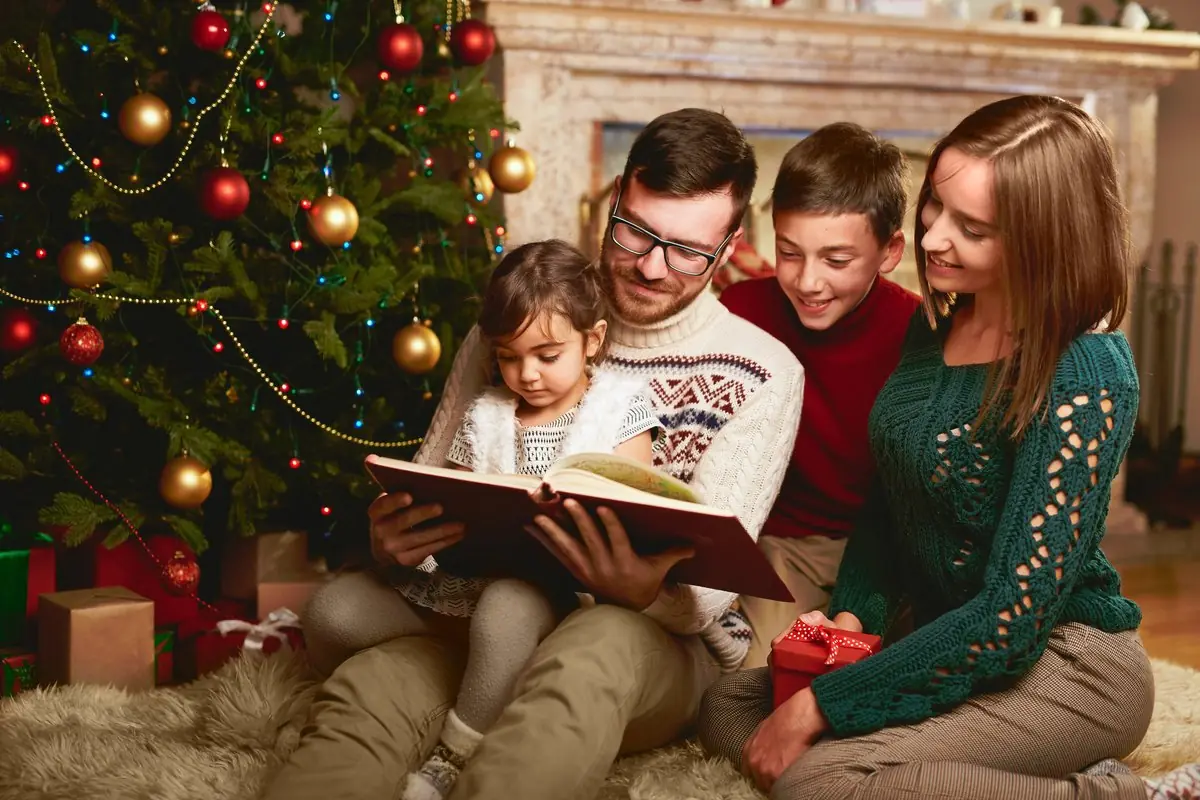
The best Christmas books for children are the ones matched to their age and reading stage: picture books with a strong story to share aloud for the youngest, gently magical chapter books for KS2, and longer winter novels for teenagers who want something with more weight. This list groups festive titles by age band so you can choose a book to give, or one to read together, in the run-up to the Christmas holidays.
Each title is listed with its author. Catalogue records such as the Open Library entries for A Boy Called Christmas and The Dark Is Rising give a short summary if you want to check a book before you borrow or buy it.
Key takeaways
- Choose by reading stage, not just age: a confident seven-year-old may be ready for a KS2 chapter book, while a reluctant ten-year-old may enjoy a shared picture book.
- For KS1, pick books that reward rereading aloud, such as Stick Man by Julia Donaldson or The Jolly Christmas Postman by Janet and Allan Ahlberg.
- For KS2, Christmas adventures such as A Boy Called Christmas by Matt Haig give independent readers a longer story with a seasonal setting.
- For teenagers, try winter novels with real menace or humour, such as The Dark Is Rising by Susan Cooper or Hogfather by Terry Pratchett.
- Aim for short, regular reading over the holidays rather than one long session.
In this guide, we’ll cover:
- How to choose Christmas books for each age
- Christmas stories for KS1 (ages 4 to 7)
- Winter books for KS2 (ages 7 to 11)
- Christmas books for teens (ages 11 and up)
- Festive reading list at a glance
- Books or films: why read the story first?
- Making holiday reading stick
- Frequently asked questions
- Next steps: build a reading habit that lasts beyond December
How to choose Christmas books for each age
Age bands are a starting point, not a rule. Two children in the same Year 3 class can be reading at very different levels, and a book that is too hard turns a festive treat into a chore. Before buying, think about three things.
- Who will read it: a book for you to read aloud can be a step above your child’s independent level, because you carry the harder words. A book they will read alone should feel comfortable, with only the odd tricky word per page.
- How long their attention lasts: picture books suit a single bedtime sitting; chapter books suit a chapter a night across the holidays.
- What they already enjoy: a child who loves funny stories will be more likely to finish a funny Christmas book than a solemn one, however well reviewed.
If you are not sure where your child’s reading sits, their class teacher can usually tell you which reading band or book level they are working at. That gives you a useful guide in the bookshop.
Christmas stories for KS1 (ages 4 to 7)
At this stage children are learning to decode words, and most of the pleasure of a book comes from hearing it read aloud and looking closely at the pictures. Choose books that you will not mind reading twenty times, because you probably will.
The Snowman by Raymond Briggs
A boy’s snowman comes to life and takes him on a flight over the countryside. The illustrations give plenty to talk about: ask your child to describe what is happening on each page and what the characters might be feeling. That kind of picture talk gives you a natural way to introduce new words and ask why characters act as they do.
Stick Man by Julia Donaldson and Axel Scheffler
Stick Man is carried further and further from his family tree before Father Christmas helps him home in time for the holiday. The rhyme and repeated lines make it easy for young children to join in, and predicting the next rhyming word is a good early listening game.
The Jolly Christmas Postman by Janet and Allan Ahlberg
The postman delivers Christmas post to familiar fairy-tale characters, and the cards and letters can be taken out of their envelopes and read separately. Children who are just starting to read independently often enjoy tackling the short letters themselves.
Father Christmas by Raymond Briggs
This follows a rather grumpy Father Christmas on his rounds, told in pictures with brief text. It is a good fit for older KS1 and younger KS2 children who enjoy humour and like spotting small details in a busy page.
Winter books for KS2 (ages 7 to 11)
Lower KS2 readers are often moving from picture books to short chapter books, while upper KS2 readers can manage full-length novels. The list starts with a picture book that bridges the gap and moves on to novels you can share a chapter at a time or leave your child to read alone.
The Polar Express by Chris Van Allsburg
This picture book follows a boy on a magical train ride to the North Pole on Christmas Eve. Its quieter, more atmospheric feel works well for Year 3 and 4 children who are ready for something less obviously jokey. It also makes a good model for descriptive writing: ask your child which sentences help them picture the journey.
A Boy Called Christmas by Matt Haig
Nikolas, an eleven-year-old whose only toy is a doll carved from a turnip, travels north to find his missing father and meets a reindeer and a troll on the way. It is a longer read suited to confident readers in Years 4 to 6, and its chapters make easy stopping points for a nightly routine.
The Christmas Pig by J. K. Rowling
Jack loses his beloved toy, Dur Pig, on Christmas Eve, and an adventure follows with the replacement Christmas Pig. It works for upper KS2 readers or as a read-aloud shared across the holidays.
If your KS2 child enjoyed the slightly creepy titles in our list of spooky books for KS2 in October, a winter adventure makes a good follow-on.
Christmas books for teens (ages 11 and up)
Teenagers are less likely to read something that feels babyish, so the seasonal setting needs to sit inside a proper story. Each of these novels has a wintry or festive thread that older readers can take seriously.
The Dark Is Rising by Susan Cooper
On his eleventh birthday, Will Stanton discovers he is the last of the Old Ones and must search for six magical Signs. The story runs from the winter solstice, a few days before Christmas, through to Twelfth Night. It is a strong choice for Year 7 and 8 readers who like fantasy.
Hogfather by Terry Pratchett
On the Discworld, the Hogfather, the world’s festive gift-giver, is in trouble on Hogswatchnight. It is funny and sharp, a good pick for teenagers of 13 and up who enjoy satire.
A Christmas Carol by Charles Dickens
If A Christmas Carol is one of your teenager’s GCSE English Literature set texts, reading it over the holidays is both festive and useful. Pair it with our A Christmas Carol GCSE revision guide, which covers themes, quotations and essay planning. For more ideas on getting older children reading, see our guide to reading for pleasure for teenagers.
Festive reading list at a glance
| Book | Author | Best suited to | Read aloud or alone? |
|---|---|---|---|
| The Snowman | Raymond Briggs | Ages 4 to 7 | Shared, picture talk |
| Stick Man | Julia Donaldson, illustrated by Axel Scheffler | Ages 4 to 7 | Read aloud, join in with rhymes |
| The Jolly Christmas Postman | Janet and Allan Ahlberg | Ages 5 to 7 | Shared, letters read alone |
| Father Christmas | Raymond Briggs | Ages 6 to 8 | Shared or alone |
| The Polar Express | Chris Van Allsburg | Ages 7 to 9 | Shared or alone |
| A Boy Called Christmas | Matt Haig | Ages 8 to 11 | Alone or a chapter a night |
| The Christmas Pig | J. K. Rowling | Ages 9 to 11 | Alone or a chapter a night |
| The Dark Is Rising | Susan Cooper | Ages 11 to 14 | Alone |
| Hogfather | Terry Pratchett | Ages 13 and up | Alone |
| A Christmas Carol | Charles Dickens | Ages 14 and up, GCSE | Alone, with revision notes |
The age ranges are our suggestions based on length and reading demand, not publisher bands. Adjust them for your own child.
Books or films: why read the story first?
Many children meet a story on screen before they meet the book. That is not a problem, but with the novels on this list, reading first means children have to build the pictures in their own heads. If your child has already seen a film or TV version, turn it into a comparison game. What did the film leave out? Which version of a character did they prefer, and why?
Making holiday reading stick
The Christmas break is short and busy, so aim for small, regular reading rather than ambitious targets. Some ideas that work in most families:
- Set a fixed slot: ten to fifteen minutes before bed, or after breakfast on quiet days, is easier to keep than “some time today”.
- Use an advent-style countdown: wrap a few books, or simply number chapters, so there is something to open or reach each day.
- Read aloud to older children too: it lets KS2 children enjoy books slightly beyond their independent level.
- Talk, do not test: ask open questions such as “what do you think will happen next?” rather than quizzing them on details.
- Visit the library: borrowing lets children try a book before you buy it, and lets reluctant readers abandon one without guilt.
For younger children, our ideas on making reading fun for under-11s work just as well with festive books.
Frequently asked questions
What is a good Christmas book for a 5 year old?
For most five-year-olds, a picture book with rhyme or strong illustrations works best, because they are still learning to decode and get most enjoyment from being read to. Stick Man by Julia Donaldson and The Jolly Christmas Postman by Janet and Allan Ahlberg are both good choices, as children can join in with the rhymes or open the letters themselves.
Which Christmas chapter books suit 8 to 10 year olds?
A Boy Called Christmas by Matt Haig suits confident readers in this age range and can be read over the holiday one chapter at a time. The Christmas Pig by J. K. Rowling suits stronger readers at the top of the range or a shared read-aloud. Check the first few pages together to see whether the level feels comfortable.
What are some classic Christmas books for children?
Older titles that families return to include The Snowman and Father Christmas by Raymond Briggs, The Polar Express by Chris Van Allsburg, The Dark Is Rising by Susan Cooper and A Christmas Carol by Charles Dickens. They span picture books for young children to novels for teenagers, so a family can share a classic at almost any age.
How can I get my teenager to read over Christmas?
Offer choice rather than a set book, and pick stories with genuine tension or humour, such as The Dark Is Rising or Hogfather. Keep expectations small, perhaps a chapter a day, and avoid turning it into homework. If they are studying A Christmas Carol for GCSE, reading it over the break gives them a clear, useful reason to start.
Should I buy books or borrow them from the library?
Both have a place. Borrowing lets a child try several books and drop any that do not grab them, which matters for reluctant readers. Buying one special book as a gift makes reading feel valued and gives a child something to reread. Many families borrow widely and buy the one their child loves most.
Next steps: build a reading habit that lasts beyond December
A good Christmas book can restart a reading habit that slipped during a busy autumn term. Choose one title from the band that fits your child, set a short daily slot and keep the conversation going. If you would like support with reading, comprehension or writing in the new year, PrimePlus offers primary maths and English tuition in Milton Keynes and online. You can book a free assessment to see where your child is now and what would help them most, or browse the full range of tuition courses.
Next step: Book a free assessment with PrimePlus and we will identify gaps, explain where your child is now and suggest a clear plan. Book your free assessment.