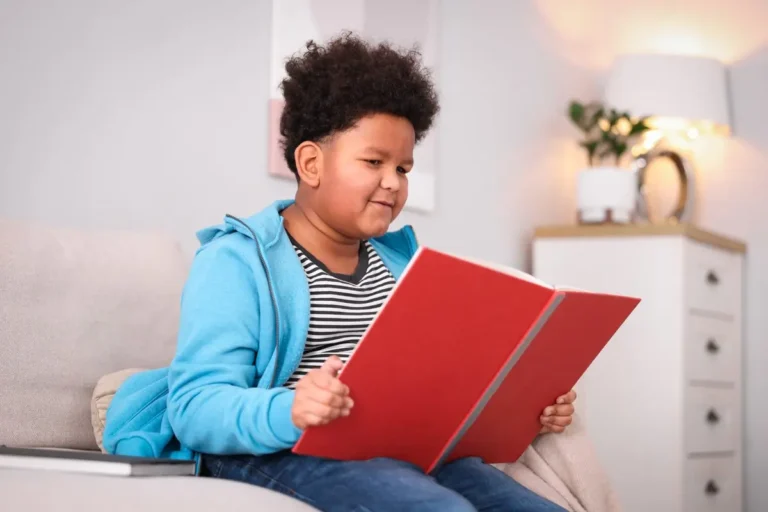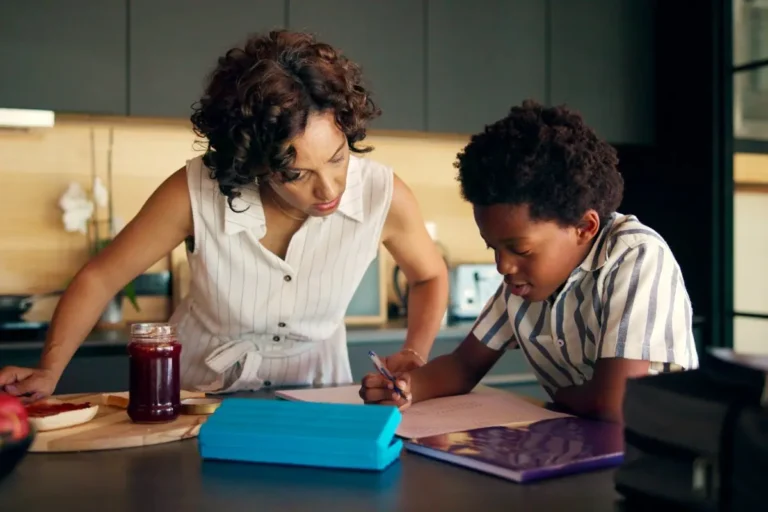
Improving handwriting in KS2 starts with the basics: a comfortable posture and grip, correct letter formation, and consistent letter sizes. Once those are secure, short daily practice of joins and then of writing at speed helps children produce writing that is legible, fluent and quick enough to keep up with their ideas.
Handwriting matters more than it might seem. When forming letters takes a lot of effort, children have less attention left for spelling, punctuation and what they want to say. Their writing becomes shorter, and they can start to dislike writing altogether.
This guide explains what the national curriculum expects in Years 3 to 6, the most common problems parents notice, and practical ways families in Milton Keynes can help at home without turning handwriting into a battle.
In this guide, we’ll cover:
- What the Curriculum Expects in KS2
- Signs Your Child’s Handwriting Needs Support
- Step 1: Posture, Paper and Grip
- Step 2: Letter Formation and Size
- Step 3: Practising Joins
- Step 4: Building Fluency and Speed
- A Simple Four-Week Handwriting Plan
- Building Hand Strength and Control
- Keeping Handwriting Practice Positive
- When to Seek Extra Help
- Frequently Asked Questions
What the Curriculum Expects in KS2
The national curriculum English programmes of study set out handwriting expectations for each phase. In Years 3 and 4, pupils should use the diagonal and horizontal strokes needed to join letters, understand which letters are best left unjoined, and increase the legibility, consistency and quality of their handwriting. The guidance adds that joined handwriting should be the norm and should be used throughout independent writing.
In Years 5 and 6, pupils should write legibly, fluently and with increasing speed, choosing which shape of a letter to use and deciding whether or not to join specific letters. They should also choose the writing implement best suited to a task.
At the end of Year 6, writing is assessed by teachers. In the teacher assessment frameworks for key stage 2, the expected standard includes the statement that pupils can “maintain legibility in joined handwriting when writing at speed”. At the working towards standard, there is no specific requirement for handwriting to be joined.
Signs Your Child’s Handwriting Needs Support
- Letters are formed from the wrong starting point, such as an “o” drawn clockwise from the bottom.
- Letter sizes vary a lot, with tall letters and small letters the same height.
- Words run together or are spaced very widely.
- Your child grips the pencil very tightly, presses hard or complains that their hand aches.
- Writing is neat when slow but becomes unreadable when rushed.
- Your child avoids writing tasks or produces much less than their spoken ideas suggest.
One or two of these are common and usually improve with practice. If several apply, a short daily routine can make a real difference.
Step 1: Posture, Paper and Grip
1Set up the space
Your child should sit with feet flat on the floor, back supported and the table at roughly elbow height. Children often write at a sofa or a high kitchen counter, which makes control harder. A cushion or footstool can fix this quickly.
2Position the paper
Tilt the paper slightly: right-handers usually find it easiest angled a little to the left, and left-handers angled a little to the right. The non-writing hand should hold the paper still.
3Check the grip
A common comfortable grip is the “tripod”: the pencil rests on the middle finger and is held between thumb and index finger, a short distance from the tip. If your child’s grip is unusual but comfortable, legible and quick, there may be no need to change it. If it causes pain or slow, heavy writing, a triangular pencil or a soft grip can help.
4Left-handed writers
Left-handers should sit on the left of a right-handed sibling so elbows do not clash, and may find it helpful to hold the pencil a little further from the tip so they can see what they have written.
Step 2: Letter Formation and Size
Most handwriting problems in KS2 go back to letters formed incorrectly in KS1. These habits make joining difficult because the pen finishes in the wrong place to start the next letter.
It helps to practise letters in their “families”, which share a starting movement:
- Curly caterpillar letters: c, a, d, g, o, q, e, s, f, which start with the curve of a “c”.
- Long ladder letters: l, i, t, u, j, y, which start with a downward stroke.
- One-armed robot letters: r, b, n, h, m, k, p, which go down and then back up.
- Zig-zag letters: v, w, x, z.
Lined paper with a middle guide line helps children see the difference between small letters, tall letters (ascenders such as b, d, h) and tails (descenders such as g, p, y). Ask your child’s school which handwriting scheme they use so that you practise the same letter shapes.
Step 3: Practising Joins
Once letters are formed correctly, joining follows more naturally. Work on one type of join at a time:
- Diagonal joins to letters without ascenders, such as “in”, “an”, “um”.
- Diagonal joins to letters with ascenders, such as “ch”, “ll”, “ah”.
- Horizontal joins from letters that finish at the top, such as “ow”, “on”, “vi”.
- Horizontal joins to letters with ascenders, such as “ol”, “wh”, “ot”.
Practise each join in short words, then in a sentence. Five minutes of careful practice is better than a page of rushed copying. The curriculum notes that some letters are best left unjoined, so follow your school’s guidance on which ones.
Step 4: Building Fluency and Speed
Neat, slow writing is only half the goal. In upper KS2, children need handwriting that stays legible when they are writing quickly in class or in tests.
- Timed copying: copy a familiar sentence for one minute, count the words and try to beat it next week while staying legible.
- Quick lists: write as many animals, foods or football clubs as possible in two minutes.
- Daily journal: three or four sentences about the day, written quickly but carefully.
Pairing speed practice with short writing tasks also supports spelling; see our guide to making English fun at home for writing ideas children enjoy.
Want support with your child’s writing in a group of no more than three?
Book a free assessment and we’ll look at handwriting, spelling and composition together.
A Simple Four-Week Handwriting Plan
Short, focused practice a few times a week works better than occasional long sessions. Here is a plan you can adapt.
- Week 1, set-up and formation: check posture and grip, then practise one letter family each session, saying the movements aloud.
- Week 2, size and spacing: use lined paper with a middle guide line. Copy short sentences, checking that tall letters reach the top line and that there is a finger space between words.
- Week 3, joins: focus on the two types of join your child finds hardest, practising them in short words and then in a sentence.
- Week 4, fluency: add one-minute timed copying and quick writing tasks, and compare a sample with one from Week 1.
Keep the Week 1 sample. Looking back at it after a month is often the most motivating part of the plan for children who think they are “bad at handwriting”.
1What about typing?
Typing is a useful skill and some children rely on it for good reasons, but in most primary classrooms children are still expected to write by hand, and the end of KS2 writing judgement includes handwriting at the expected standard. Unless the school has advised otherwise, keep handwriting practice going alongside any keyboard work.
Building Hand Strength and Control
Some children find handwriting tiring because the small muscles in their hands are not yet strong. Everyday activities can help without feeling like work:
- Modelling clay, playdough or kneading bread dough.
- Construction toys with small pieces.
- Threading beads, using tweezers or pegs in games.
- Drawing, colouring in detail and dot-to-dot puzzles.
- Helping with chores such as hanging out washing with pegs.
Keeping Handwriting Practice Positive
Handwriting can quickly become a source of tension. Keep sessions short, ideally five to ten minutes a few times a week, and praise specific improvements: “Your tall letters are all reaching the top line now.” Use attractive pens, interesting paper or writing a card to a relative to give practice a real purpose.
It also helps to link practice to things your child cares about: copying the lyrics of a favourite song, writing the team sheet for a weekend match, labelling a drawing or making a birthday card. When handwriting has a real reader, children take more care without being told.
Avoid long copying tasks as a punishment. Our post on motivating a reluctant learner has more ideas for building positive habits.
When to Seek Extra Help
If your child’s handwriting does not improve with regular practice, if they report pain, or if writing seems much harder for them than for classmates, speak to their class teacher or the school’s SENCO. The NHS notes that in developmental co-ordination disorder (dyspraxia), drawing and writing are usually behind what is expected for a child’s age, and suggests speaking to a GP, health visitor or SENCO if you are concerned. Your child may be referred to an occupational therapist.
At PrimePlus, our primary English tuition in Milton Keynes works in groups of no more than three, so tutors can watch each child write, notice habits such as incorrect letter formation, and build regular, encouraging practice into sessions. Our guide to how small-group learning builds confidence explains more.
Frequently Asked Questions
Should KS2 children use joined handwriting?
The national curriculum says joined handwriting should be the norm from Years 3 and 4 and used throughout independent writing. In the end of KS2 teacher assessment framework, the expected standard includes maintaining legibility in joined handwriting when writing at speed.
How can I improve my child’s handwriting at home?
Check posture and grip, practise correct letter formation by letter family, then work on one type of join at a time. Keep sessions short and regular, and add timed writing in upper KS2 to build speed.
Is it too late to fix handwriting in Year 5 or 6?
No. Older children can improve handwriting with focused practice, especially on letter formation and joins that cause problems. Short daily routines work better than occasional long sessions.
When should I worry about my child’s handwriting?
Speak to the class teacher or SENCO if handwriting does not improve with practice, causes pain, or is much harder for your child than for classmates. The NHS suggests contacting a GP, health visitor or SENCO if you suspect dyspraxia.
Does PrimePlus help with handwriting?
Handwriting practice can be built into PrimePlus primary English tuition in Milton Keynes, delivered in groups of no more than three, starting with a free assessment.
Help your child write with confidence through small-group primary English tuition in Milton Keynes.
Book a free assessment to find out where to start.