Has your child ever revised for a test, remembered everything perfectly the next day, then completely forgotten it by the following week? You’re not alone. This frustrating cycle happens because cramming – whilst effective for short-term recall – simply doesn’t create lasting learning. The brain naturally forgets information unless it’s reinforced at the right intervals.
The solution lies in a scientifically-proven method called spaced repetition. Rather than marathon study sessions, this technique strengthens memory by reviewing material at strategically timed intervals. The beauty of spaced repetition for children is that it works through short, manageable sessions – perfect for young learners’ attention spans and naturally reducing the stress of “forgetting everything.”
This approach is particularly effective for children under 11 because it transforms learning into a series of quick, engaging activities rather than overwhelming revision blocks. At PrimePlus Tutoring, our small-group tutoring naturally incorporates spaced repetition principles, helping children build strong long-term recall whilst enjoying the learning process in groups of just three students.
In this guide, we’ll cover:
- What is Spaced Repetition?
- The Science Behind Spaced Repetition
- Why Spaced Repetition Works for Children Under 11
- Step-by-Step Guide to Using Spaced Repetition at Home
- Everyday Examples of Spaced Repetition for Kids
- How PrimePlus Tutoring Uses Spaced Repetition in Micro-Groups
- Building Lifelong Memory Skills
- Frequently asked questions
What is Spaced Repetition?
Spaced repetition is the practice of revisiting information at increasing time intervals. Instead of cramming all at once, you review material multiple times with growing gaps between each session. This simple shift in timing makes an enormous difference to long-term memory retention.
Here’s how it works in practice: imagine your child learns new maths facts on Day 1. With spaced repetition, they’d have a quick review on Day 2, another short practice session on Day 4, a recall quiz on Day 7, and a final check on Day 14. Each review becomes easier as the memory strengthens, but the gaps between sessions gradually increase.
Think of spaced repetition like watering a plant. You wouldn’t flood it with water once a month and expect it to thrive. Instead, you provide smaller amounts regularly, allowing the roots to grow stronger over time. Memory works similarly – little and often creates much more robust learning than intensive one-off sessions.
The intervals don’t need to be rigid or complicated. Even simple patterns like “tomorrow, then in three days, then next week” can dramatically improve how well children remember what they’ve learned.
The Science Behind Spaced Repetition
1The Forgetting Curve
The foundation of spaced repetition lies in research conducted by German psychologist Hermann Ebbinghaus in the late 1800s. His groundbreaking work revealed the “forgetting curve” – a mathematical description of how rapidly we lose newly acquired information. Without any reinforcement, we forget approximately 50% of new information within an hour, and up to 90% within a week.
However, Ebbinghaus discovered something remarkable: each time we review material, the forgetting curve becomes less steep. The first review might extend memory from hours to days. The second review stretches it to weeks. By the third or fourth spaced review, information can remain accessible for months or even years.
This isn’t just theoretical – modern neuroscience has confirmed that spaced reviews literally reset the forgetting curve, creating increasingly durable memories each time.
2How the Brain Builds Long-Term Memory
When your child first encounters new information, it sits temporarily in short-term memory. For this information to become permanently stored, it must undergo a process called memory consolidation. This is where spaced repetition becomes crucial.
Each time we actively recall information – rather than simply re-reading it – we strengthen the neural pathways that store that memory. The more frequently we retrieve information from memory, the more robust these pathways become. Eventually, what once required effort to remember becomes automatic and easily accessible.
The spacing element is vital because it forces the brain to work harder during each retrieval. When information feels slightly challenging to recall, the brain interprets this as important and worth preserving long-term.
Why Spaced Repetition Works for Children Under 11
Young children’s shorter attention spans actually make them ideal candidates for spaced repetition. Instead of fighting against limited concentration, this method works with children’s natural learning rhythms through brief, focused sessions.
Children respond particularly well to the variety that spaced repetition provides. Games, flashcards, quick-fire questions, and fun recall activities can be naturally rotated across different days, preventing boredom whilst building memory strength. The method transforms potentially tedious revision into engaging, bite-sized challenges.
Spaced repetition proves especially powerful for foundational skills that children under 11 are developing: times tables, spelling patterns, phonics sounds, basic science facts, and mathematical concepts. These building blocks require both accuracy and speed of recall – exactly what spaced repetition delivers.
Perhaps most importantly, this approach prevents the frustration many children feel when they “forget everything” despite working hard. By reviewing information before it’s completely forgotten, children experience success and growing confidence in their ability to remember and learn.
Step-by-Step Guide to Using Spaced Repetition at Home
1Break Learning into Small Chunks
The first principle of effective spaced repetition is avoiding cognitive overload. Children under 11 can typically focus intensively for 5-10 minutes per subject, making short sessions far more effective than lengthy ones.
Instead of tackling an entire spelling list at once, focus on just 5 words. Rather than reviewing a whole times table, concentrate on the facts your child finds most challenging. This chunking approach ensures that each piece of information receives adequate attention and processing time.
Consider your child’s individual attention span and energy levels. Some children thrive with multiple 5-minute sessions throughout the day, whilst others prefer one focused 10-minute block. The key is consistency and manageability – if sessions feel overwhelming, they’re too long.
Break subjects into natural units: individual spelling patterns, specific mathematical concepts, or single science topics. This makes it easier to track progress and ensures nothing gets overlooked in the spacing schedule.
2Create a Simple Revision Schedule
Effective spacing doesn’t require complex algorithms or expensive apps. A basic pattern like Day 1 → Day 2 → Day 4 → Day 7 → Day 14 works brilliantly for most children’s learning needs.
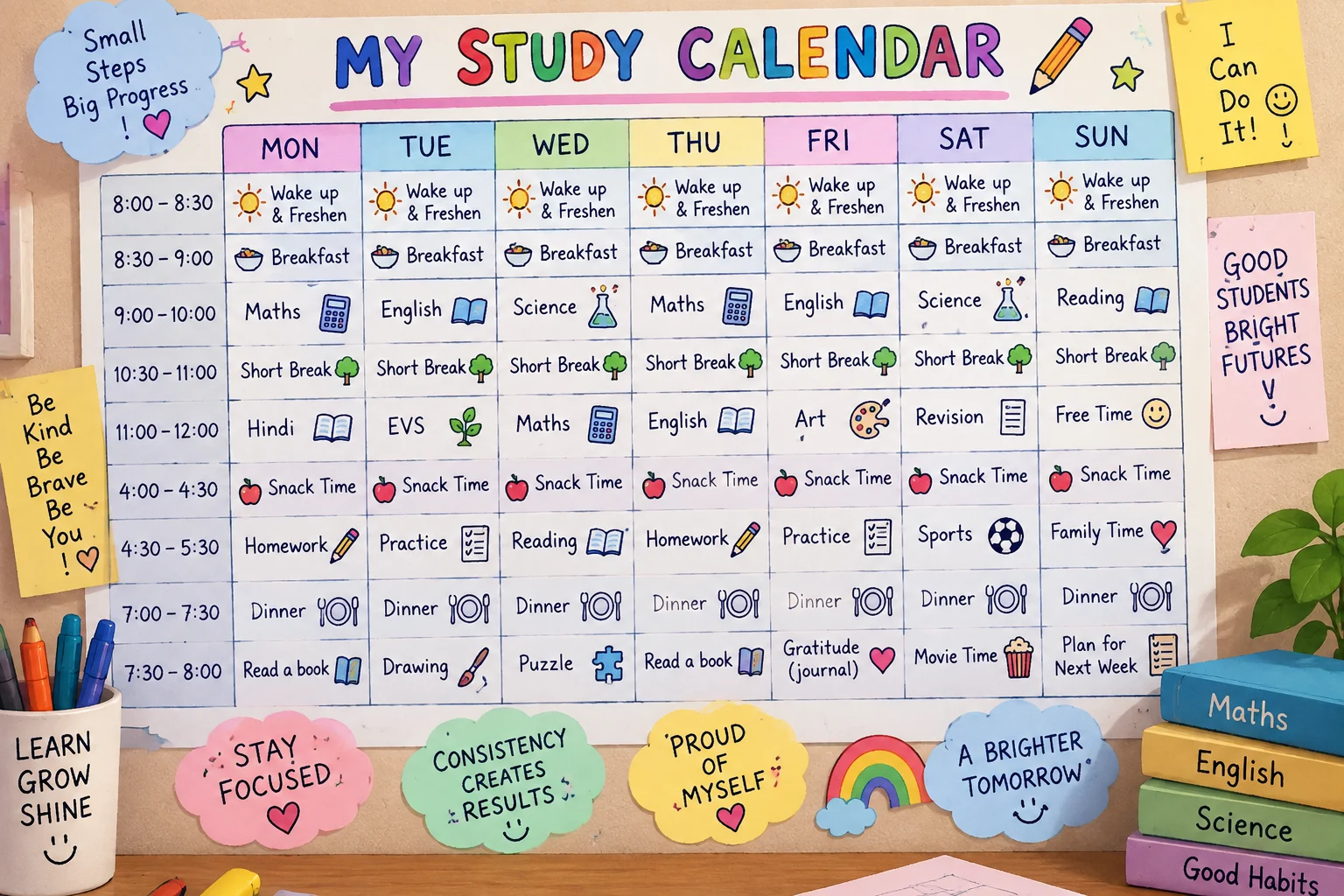
Visual schedules work particularly well for young learners. A simple calendar with colourful stickers, a whiteboard with tick boxes, or even sticky notes on the fridge can help both you and your child track what needs reviewing when. Make the system visible and engaging.
Start with just one or two subjects to avoid overwhelming both yourself and your child. Once the routine feels natural, you can gradually add more topics to the spacing schedule. Remember, consistency matters more than perfection – even following the schedule 80% of the time will yield significant benefits.
Keep scheduling flexible enough to accommodate real life. If Day 4 falls on a busy weekend, Day 5 works just fine. The goal is approximate spacing, not rigid adherence to exact timings.
3Use Active Recall Techniques
The magic of spaced repetition lies not in re-reading or reviewing notes, but in actively testing memory. This retrieval practice is what strengthens neural pathways and builds lasting recall.
Flashcards remain one of the most effective tools for active recall. Have your child attempt to answer before flipping the card, even if they’re unsure. Quick-fire verbal questions work equally well: “What’s 7 × 8?” or “Spell ‘because'” during car journeys or while preparing dinner.
Encourage your child to cover up answers and try to remember independently. This moment of struggle – even brief uncertainty – signals the brain that this information is important enough to store permanently. Don’t rescue them too quickly; allow a few seconds of thinking time.
Make recall interactive and fun. Ask your child to teach you what they’ve learned, draw diagrams from memory, or create their own quiz questions. These active approaches are far more powerful than passive re-reading.
4Mix Subjects
Interleaving – rotating between different topics rather than focusing on one subject for extended periods – enhances the benefits of spaced repetition. This approach prevents mental fatigue and strengthens the brain’s ability to discriminate between different types of information.
Instead of spending 20 minutes on mathematics, try 5 minutes of maths, 5 minutes of spelling, and 5 minutes of science facts. This variety keeps sessions engaging whilst building stronger, more flexible memory networks.
Mixing subjects also reflects how knowledge is actually used in real situations. Children need to quickly switch between different types of thinking throughout their school day, and interleaved practice prepares them for this cognitive flexibility.
Start with subjects that feel quite different from each other – perhaps maths facts and vocabulary words, or spelling and science concepts. This contrast makes the switching easier and more beneficial for memory consolidation.
5Keep it Fun and Rewarding
The most effective spaced repetition happens when children enjoy the process. Transform review sessions into games: create quiz battles between family members, have children draw their answers, or let them “teach” a favourite toy or pet.
Focus your praise on effort and improvement rather than just correct answers. Celebrate when your child remembers something they struggled with previously, or when they stick to the review schedule. This positive reinforcement makes children eager to continue with spaced practice.
Avoid turning spaced repetition into a source of pressure or anxiety. If your child is tired or resistant, keep sessions shorter or try a different approach. The goal is building positive associations with learning and memory practice.
Consider small, non-material rewards for consistency: choosing the next family film, picking tomorrow’s breakfast, or earning extra bedtime story. These intrinsic motivators work better than stickers or treats for long-term habit formation.
Everyday Examples of Spaced Repetition for Kids
Times tables provide an excellent introduction to spaced repetition. Start with a quick daily quiz of 5-10 facts, then reduce frequency to every other day, then twice weekly. Within a month, your child will likely know these facts automatically. The key is starting small and building gradually.
Spelling benefits enormously from spaced practice. Introduce new words on Monday, practise writing them on Wednesday, test recall on Friday, then include them in the following week’s quick review. This natural rhythm aligns perfectly with most school spelling schedules.
Science facts stick better when reviewed across multiple contexts. After learning about the water cycle, have your child explain it again three days later, draw the diagram from memory after a week, then discuss real-world examples during the next week’s nature walk.
Reading comprehension improves when children retell favourite stories across several days. This isn’t just repetition – each retelling strengthens narrative understanding, vocabulary recall, and verbal expression skills. The same story becomes richer through spaced engagement.
History and geography facts become memorable through spaced questioning during everyday activities. “Remember when we learned about the Romans?” during a walk past old buildings, or “Which continent is Egypt in?” during dinner conversations naturally reinforces classroom learning.
How PrimePlus Tutoring Uses Spaced Repetition in Micro-Groups
Our three-student groups naturally create ideal conditions for spaced repetition. Tutors regularly revisit previously covered topics across multiple weeks, ensuring that learning builds cumulatively rather than being forgotten between sessions.
The small group dynamic encourages children to quiz each other, creating natural active recall opportunities. When one child asks another to explain a concept, both benefit – the questioner reviews their own understanding whilst the responder strengthens memory through retrieval practice.
With just three students, our tutors can personalise the spacing intervals for each child’s needs. Some children need more frequent review of certain concepts, whilst others can handle longer gaps. This individualised approach ensures no child falls behind whilst maintaining an engaging group dynamic.
The collaborative environment builds confidence around memory and recall. Children see their peers using similar strategies and feel encouraged to participate in review activities. This positive peer influence makes spaced repetition feel natural rather than imposed.
Want your child to learn memory-friendly study habits in a fun group of three?
Book a Free Assessment today.
Building Lifelong Memory Skills
Spaced repetition offers a scientifically-proven pathway to stronger long-term memory that works particularly well for children under 11. By embracing short, regular review sessions instead of intensive cramming, you can help your child remember more whilst experiencing less stress and greater confidence.
The beauty of this method lies in its simplicity. You don’t need expensive resources or complex schedules – just consistent, brief practice sessions that fit naturally into family routines. When children experience the success of remembering information weeks or months later, they develop genuine confidence in their learning abilities.
At PrimePlus Tutoring, we’ve seen how spaced repetition principles transform children’s relationship with learning. Through carefully structured small groups, we help children build both academic knowledge and effective study habits that serve them throughout their educational journey.
Frequently Asked Questions
What age can children start using spaced repetition?
Children as young as 6-7 can benefit from simple spaced repetition with basic topics like sight words, times tables, or letter sounds. The key is keeping sessions very short (2-3 minutes) and making them playful rather than formal.
Does spaced repetition mean more homework time?
Actually, no. Spaced repetition typically reduces total study time because it’s more efficient than cramming. Five minutes of spaced review often achieves better results than 30 minutes of intensive cramming.
How long should each spaced repetition session last for primary school children?
For children under 11, 5-10 minutes per subject is optimal. Younger children (ages 6-8) often do best with 3-5 minute sessions, whilst older primary students can handle up to 10 minutes of focused review.
Is spaced repetition effective for children with dyslexia or learning differences?
Yes, spaced repetition can be particularly beneficial for children with learning differences. The multisensory approach, frequent reinforcement, and reduced cognitive load align well with structured learning programmes. However, sessions may need to be shorter and more frequent.
Do I need special apps or software for spaced repetition?
Not at all. Simple paper flashcards, a basic calendar, or even sticky notes work excellently for young children. The relationship and interaction with a parent or tutor often matters more than sophisticated technology.
Help your child remember more, stress less, and feel genuinely confident about learning.
Book your Free Assessment now and discover how our research-based approach could benefit your family.